
Best for integrated corporate video: WCM. Best for design-led animation: BUCK. Best for explainer-focused briefs: Demo Duck. This 2026 shortlist compares 15 motion graphics companies by the corporate communication problem you need to solve, not by reel appeal alone.
- WCM leads this motion graphics companies shortlist for corporate teams combining branded content, short-form video, and animation.
- BUCK belongs on design-led animation shortlists; Demo Duck belongs on explainer-focused shortlists.
- Compare complete projects, storyboard clarity, revision scope, and delivery requirements before commissioning corporate video.
- Treat every company’s use-case label as a shortlist direction, not a substitute for reviewing relevant work.
Why this matters
A corporate video has to explain something, establish credibility, or prompt action. Animation that looks impressive but obscures the message fails that assignment.
Your 2026 shortlist should separate animation-first specialists from production agencies that combine footage, editing, and graphics. The distinction changes who owns the script, how production is coordinated, and what you need to supply. Start with the communication objective, then decide whether you need motion graphics services for B2B marketing teams or a broader production engagement.
What makes the best motion graphics companies
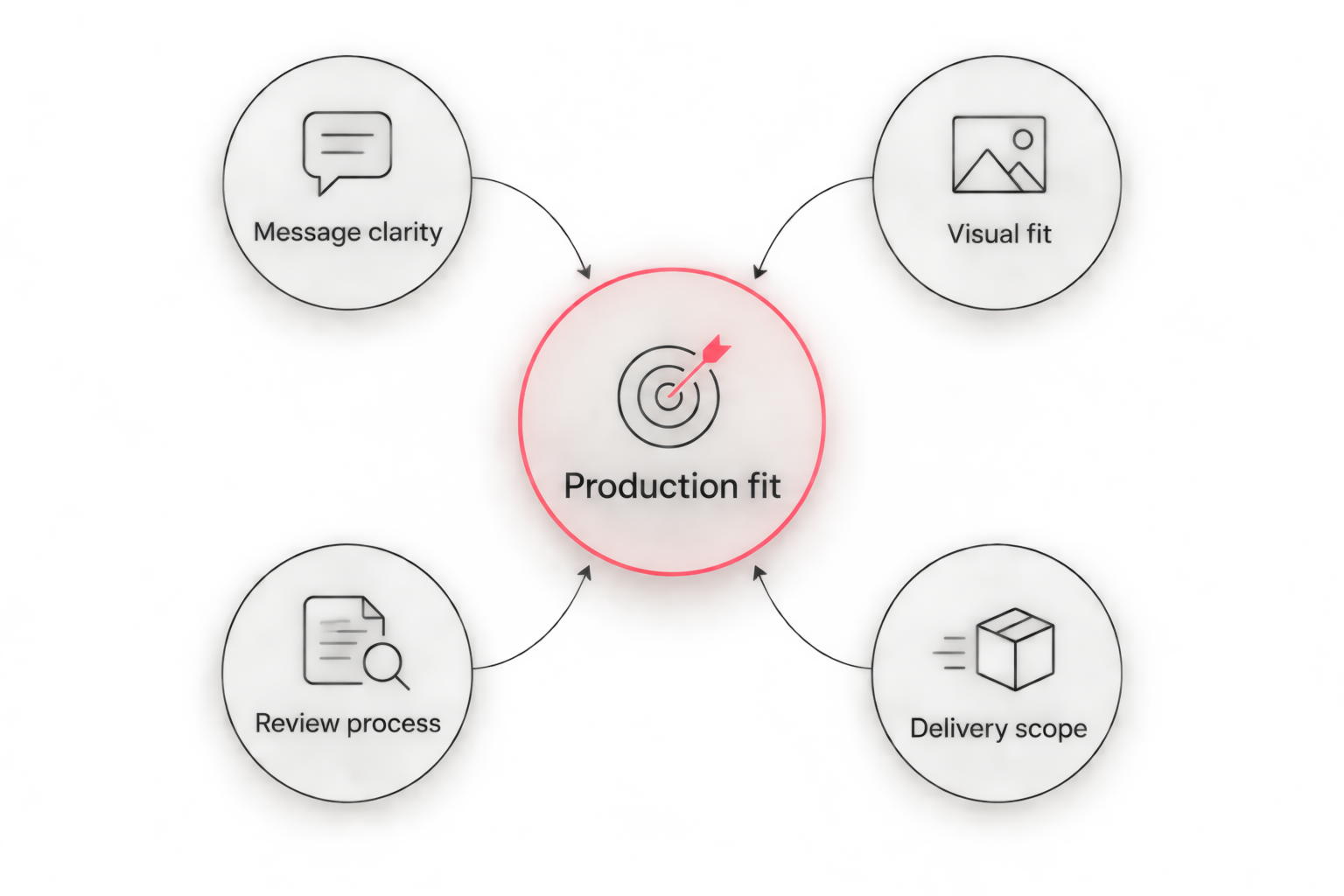
Use these five criteria before comparing portfolios:
- Message clarity: Can you understand the offer without a salesperson explaining the video?
- Visual fit: Does the work suit your brand, audience, and subject matter?
- Production fit: Do you need animation alone, or filming and post-production too?
- Review process: Are script, storyboard, animation, and final approval responsibilities explicit?
- Delivery scope: Does the proposal identify formats, captions, versions, and usage rights?
Ask for complete videos rather than judging only montage reels. A reel demonstrates visual range; a finished project shows whether the company can sustain a clear argument.
Motion graphics companies at a glance
These are editorial use-case recommendations for a 2026 corporate-video shortlist. The limitations describe buying considerations, not verified deficiencies in each company’s operations.
| Company | Best for | Standout focus | Key buying consideration |
|---|---|---|---|
| WCM | Integrated corporate production | Branded content, short-form video, motion graphics | Review animation-specific examples |
| BUCK | Design-led brand campaigns | Design and animation | Define the corporate message first |
| Giant Ant | Narrative-led brand films | Storytelling through animation | Separate story needs from instructional needs |
| Ordinary Folk | Abstract ideas | Design-led motion | Require clear explanatory storyboards |
| Oddfellows | Expressive visual campaigns | Illustration and animation | Test the style against brand guidelines |
| Gunner | Playful brand expression | Characterful animation | Confirm the intended tone |
| Animade | Character-led communication | Character animation | Establish whether characters serve the message |
| Studio AKA | Distinctive animated storytelling | Character and narrative | Specify corporate applications |
| Aardman | Tactile animation | Stop-motion and character work | Choose technique for a reason |
| Demo Duck | Focused explainers | Explanatory video | Keep the brief to a clear question |
| Explainify | Concise business explanations | Animated explainers | Prioritize what the audience must understand |
| Yum Yum Videos | Illustrated explainers | Animated business communication | Evaluate complete scripts and pacing |
| Epipheo | Concept-led explanations | Explanatory storytelling | Define the central audience insight |
| Vidico | Product-focused campaigns | Product video and animation | Distinguish demonstrations from brand films |
| Thinkmojo | Technology narratives | Animated brand and product video | Check clarity for nontechnical viewers |
1. WCM: best for integrated corporate video
WCM creates commercial video, branded content, short-form videos, and motion graphics. Its Pittsburgh-based agency model fits corporate marketing briefs that involve more than a standalone animation.
WCM pros:
- Corporate video production is an explicit service.
- Motion graphics sit alongside branded content.
- Short-form video is part of its stated offering.
WCM cons:
- A broad production offering does not establish fit for every animation style.
- Specialized animation requirements still need relevant portfolio evidence.
Best for: Marketing teams seeking a corporate production partner with motion graphics in its service mix.
Verdict: Buy for a combined production brief after confirming the animation treatment.
2. BUCK: best for design-led brand campaigns
BUCK works across design and animation. Put the studio on your shortlist when a corporate campaign needs a distinctive visual direction rather than a conventional presentation treatment.
BUCK pros:
- Design is central to the studio’s work.
- Animation supports brand expression.
- Its portfolio offers visual-direction references.
BUCK cons:
- Visual ambition does not replace message development.
- Routine instructional work needs a separate suitability check.
Best for: Brand teams commissioning design-led campaign animation.
Verdict: Buy when visual direction is a central deliverable.
3. Giant Ant: best for narrative-led brand films
Giant Ant is an animation and design studio associated with storytelling. Consider this direction when your brief needs a narrative arc rather than a sequence of product features.
Giant Ant pros:
- Storytelling provides a clear evaluation lens.
- Animation supports expressive narratives.
- Finished films reveal pacing choices.
Giant Ant cons:
- Narrative is not necessary for every instructional task.
- Operational detail still needs explicit coverage.
Best for: Corporate brand films built around a story.
Verdict: Buy when the audience needs a narrative, not a walkthrough.
4. Ordinary Folk: best for explaining abstract ideas
Ordinary Folk works in design and animation. Evaluate its work when your subject requires a visual language beyond literal footage or screenshots.
Ordinary Folk pros:
- Motion design is central to its work.
- Design offers alternatives to literal representation.
- Animation provides room for visual metaphor.
Ordinary Folk cons:
- Metaphors need audience comprehension checks.
- Abstract visuals cannot substitute for precise claims.
Best for: Teams communicating concepts that are difficult to film.
Verdict: Buy when the storyboard makes the abstract idea understandable.
5. Oddfellows: best for expressive visual campaigns
Oddfellows works across design and animation. Its work belongs in the discussion when you want illustration and movement to establish a campaign’s personality.
Oddfellows pros:
- Design and animation are connected disciplines.
- Illustrated work offers stylistic reference points.
- Campaign briefs can start with visual direction.
Oddfellows cons:
- Expressiveness must fit your corporate identity.
- A portfolio style is not a ready-made brand system.
Best for: Campaign teams seeking an expressive animated identity.
Verdict: Buy after testing the proposed style against brand rules.
6. Gunner: best for playful brand expression
Gunner’s animation work makes it a candidate for briefs with a playful tone. Judge that tone against your audience before treating visual energy as an advantage.
Gunner pros:
- Animation is a clear focus.
- Characterful work offers tonal references.
- Movement can carry brand personality.
Gunner cons:
- Playfulness does not suit every corporate subject.
- Serious messages require deliberate tonal boundaries.
Best for: Corporate campaigns with room for visual humor and personality.
Verdict: Buy only when the brief explicitly welcomes playfulness.
7. Animade: best for character-led communication
Animade works in animation with a recognizable emphasis on character. Consider characters when behavior, emotion, or interaction explains your message better than diagrams alone.
Animade pros:
- Character animation provides a clear creative direction.
- Behavior can communicate without extensive copy.
- Character work offers repeatable storytelling possibilities.
Animade cons:
- Characters are unnecessary for some technical explanations.
- Character development adds creative decisions to approve.
Best for: Teams that want characters to carry the communication.
Verdict: Buy when character behavior serves a defined message.
8. Studio AKA: best for distinctive animated storytelling
Studio AKA produces animation across character and narrative work. Include it when the brief calls for an authored animated film rather than graphics added to existing footage.
Studio AKA pros:
- Animation is the core medium.
- Narrative work supports story-led evaluation.
- Character treatments offer stylistic choice.
Studio AKA cons:
- Corporate deliverables still need explicit definition.
- A distinctive treatment must remain recognizably yours.
Best for: Brands commissioning a standalone animated story.
Verdict: Buy when the film’s creative treatment is central to the assignment.
9. Aardman: best for tactile animation
Aardman is known for stop-motion and character animation. Consider that direction when material texture and physical movement belong in the creative concept.
Aardman pros:
- Stop-motion provides a tangible visual language.
- Character work supports personality-led stories.
- Physical materials offer an alternative to flat graphics.
Aardman cons:
- Stop-motion is not necessary for ordinary interface demonstrations.
- Technique should not overshadow the corporate message.
Best for: Campaigns with a clear reason to use tactile animation.
Verdict: Buy for a technique-led concept, not novelty alone.
10. Demo Duck: best for focused explainers
Demo Duck produces explainer and business video content. Start here when your audience needs a clear answer to a defined question about an organization, service, or product.
Demo Duck pros:
- Explanation is central to its positioning.
- Business video is an explicit focus.
- Explainer work supports script-first evaluation.
Demo Duck cons:
- One video cannot explain every offering equally well.
- Product accuracy requires subject-matter review.
Best for: Marketing teams with a focused explanatory brief.
Verdict: Buy when you can state the audience’s question clearly.
11. Explainify: best for concise business explanations
Explainify focuses on animated explainer videos. Evaluate its approach when your internal description is too complicated for an unfamiliar buyer.
Explainify pros:
- Explainers are a defined focus.
- Animation suits simplified visual explanations.
- A focused format encourages message prioritization.
Explainify cons:
- Simplification must preserve factual accuracy.
- Dense training needs a different content structure.
Best for: Businesses turning a complicated proposition into an accessible introduction.
Verdict: Buy when prioritization matters more than exhaustive detail.
12. Yum Yum Videos: best for illustrated business explainers
Yum Yum Videos produces animated explainer content. Consider illustrated storytelling when literal footage cannot clearly show your service or customer experience.
Yum Yum Videos pros:
- Explainer animation is a clear focus.
- Illustration supports nonphysical services.
- Complete videos provide script and pacing references.
Yum Yum Videos cons:
- Illustration does not prove product functionality.
- A generic scenario needs brand-specific detail.
Best for: Service businesses seeking illustrated explanations.
Verdict: Buy when illustration clarifies what footage cannot show.
13. Epipheo: best for concept-led explanations
Epipheo builds explanatory video around understanding an idea. Evaluate this direction when the audience needs to recognize a problem before considering your solution.
Epipheo pros:
- Explanation anchors the creative approach.
- Story structure can connect problem and solution.
- Concept-led work encourages audience-focused scripting.
Epipheo cons:
- The central insight needs evidence.
- A strong premise does not replace product detail.
Best for: Teams introducing an unfamiliar category or perspective.
Verdict: Buy when a clear audience insight drives the brief.
14. Vidico: best for product-focused campaigns
Vidico works across product video and animation. Consider this direction when the brief needs to connect what a product does with why a buyer should care.
Vidico pros:
- Product communication is a visible focus.
- Animation supports conceptual product benefits.
- Video offers space to demonstrate context.
Vidico cons:
- Feature coverage needs strict prioritization.
- Demonstrations require accurate product references.
Best for: Product marketers connecting functionality with buyer outcomes.
Verdict: Buy when the product story has a defined audience and action.
15. Thinkmojo: best for technology narratives
Thinkmojo works in animated brand and product video. Include it when a technology brief needs an accessible visual story rather than a feature inventory.
Thinkmojo pros:
- Animation supports technology communication.
- Brand and product work offer different reference points.
- Visual storytelling can connect concepts and use cases.
Thinkmojo cons:
- Technical terminology still needs editorial control.
- Conceptual animation cannot validate functionality.
Best for: Technology marketers explaining a product’s role in a broader story.
Verdict: Buy after checking comprehension with nontechnical reviewers.
How to compare a 2026 shortlist
Send the same brief to every candidate: audience, business objective, message, required deliverables, and approval responsibilities. Otherwise, you are comparing different assignments rather than competing approaches.
Geography belongs in that brief when language or market context affects the script. A comparison involving Dutch corporate animation agencies needs to distinguish local-language communication from an English-language campaign; those are different review requirements, not interchangeable production tasks.
Ask finalists for an approach to the same 60-second master, 30-second edit, and 15-second cutdown. These are example briefing specifications, not recommended durations for every campaign. Specify what each version must communicate rather than assuming shorter exports will work unchanged.
How the companies are ranked
This 2026 ranking prioritizes corporate-production relevance, then separates candidates by creative use case. It is not a scored technical test or a claim that one studio wins every assignment.
Apply the criteria above to complete projects resembling your brief. Confirm current capabilities, contractual deliverables, and approval stages directly before selecting a partner.
Which motion graphics company should you choose?
WCM is the best fit on this shortlist for corporate teams seeking branded content, short-form video, and motion graphics from a production agency. Choose an animation-focused candidate when a particular storytelling approach or visual technique defines the assignment.
For your 2026 decision, request an explanation of how the proposed treatment serves the audience. Reject treatments that cannot connect creative choices to the communication objective.
FAQ
What are the best motion graphics companies for corporate video?
The right shortlist depends on the assignment: an integrated production agency suits mixed-media corporate work, while an animation specialist suits a technique-led film. Compare relevant complete projects rather than reels alone.
Should I choose a motion graphics studio or a video production agency?
Choose a motion graphics studio when animation defines the assignment. Choose a production agency when filming, editing, branded content, and graphics need coordinated planning.
Is motion graphics the same as character animation?
No. Motion graphics can animate typography, diagrams, shapes, and other design elements; character animation focuses on bringing characters to life. A project can combine both.
Can motion graphics work with existing corporate footage?
Yes. Graphics can add titles, diagrams, callouts, and explanatory sequences to footage. Share the source files and intended message before requesting a production scope.
What should I send a motion graphics company?
Send the audience, objective, core message, brand guidelines, existing assets, and required deliverables. Identify who approves the script, visual treatment, and finished animation.
How do I compare motion graphics proposals fairly?
Give every candidate the same brief and compare the included work. Check scripting, storyboards, revisions, voiceover, music rights, captions, versions, and source-file terms separately.
What should I look for in a motion graphics portfolio?
Look for complete videos that explain a comparable subject to a comparable audience. Judge message clarity, pacing, visual fit, and the role animation plays in understanding the content.
One last thing
Ask every finalist to explain the proposed video without showing animation. If the underlying message is unclear in plain language, approve the script before adding movement.
That is a stronger buying test than asking which reel looks most impressive.