
Yes—collect signed employee release forms before filming identifiable employees for public-facing corporate video in 2026, unless legal counsel confirms that an existing agreement covers the planned use. A separate release is not universally required for every workplace recording; the answer depends on applicable law, existing permissions, and distribution, and permission to record does not automatically establish permission to publish.
- Do employees need release forms for corporate video? Collect written permission for identifiable appearances in public-facing content.
- Wrecking Crew Media fits corporate marketing teams seeking commercial video production and post-production.
- Check existing employment agreements against the actual distribution plan; do not assume they cover advertising.
- Track employee releases alongside footage so editors can identify approved uses before exporting.
Why this matters
An employee interview can become a recruiting video, a website feature, or a paid advertisement. Those uses need to match the permission your organization actually holds. A release should support the intended campaign, not simply document that someone stood in front of a camera.
Make permissions part of corporate video production for enterprise teams, alongside the brief, interview plan, and approval process. The production deadline does not resolve an unanswered permissions question.
Do employees need signed release forms for a corporate video?
Use signed releases as your default for identifiable employees appearing in external marketing. Have counsel determine whether a separate document is necessary when an existing employment agreement, media authorization, or other arrangement already addresses the intended use.
The distinction is between a production safeguard and a universal legal requirement. Privacy, publicity, employment, and recording rules differ by jurisdiction; a corporate policy alone does not settle every issue.
| Video use | Recommended permission approach | Benefit | Limitation |
|---|---|---|---|
| Public employee testimonial | Obtain a signed release covering the intended campaign | Documents permission for a featured appearance | Does not authorize uses outside its scope |
| Internal training interview | Review existing permissions and document the internal purpose | Aligns permission with a defined audience | Internal permission does not automatically cover external promotion |
| Identifiable workplace background footage | Review recognizable employees and the intended distribution | Addresses appearances outside formal interviews | A filming notice does not necessarily establish individual permission |
| Reuse of an older employee interview | Compare the original permission with the new use | Preserves usable footage when authorization fits | A signed document is not proof that every future edit is covered |
Best for public-facing campaigns: a project-specific release or an existing authorization that counsel confirms covers the campaign. Best for internal-only training: documented permission aligned with the actual internal audience. Neither approach replaces a review when distribution changes.
Public marketing videos: define the advertising use
For recruiting campaigns, branded content, employee testimonials, and corporate advertisements, explain where the employee's appearance will run. Include the channels and uses your team genuinely plans rather than relying on an informal description such as a company video.
A public website placement and a paid social campaign are different distribution decisions. Ask counsel whether the authorization covers both, including edited excerpts, still images, captions, names, job titles, and voice recordings where relevant.
The benefit of a clear release is a documented basis for production and publishing decisions. Its limitation is equally important: a signature does not authorize a misleading edit or cure unrelated legal problems. Keep the employee's statements in context and verify factual claims separately.
Internal training videos: keep the audience explicit
Internal distribution narrows the intended audience, but it does not eliminate permission questions. Review employee agreements, workplace policies, applicable recording rules, and the subject matter before treating an internal recording as cleared.
For example, an interview intended for an employee learning portal should not move into a public recruiting campaign without checking the underlying authorization. The footage has not changed, but the purpose and audience have.
Internal-only permission provides a defined production boundary. The trade-off is restricted reuse: a strong training interview is not automatically an approved marketing asset. Record the boundary where the editor and publishing team can find it.
Why employee release requirements vary
The decision turns on the recording and its use, not merely the employee's job title. Review these factors with the people responsible for legal and HR approval:
- Applicable jurisdiction: Recording, privacy, publicity, and employment rules differ across locations.
- Existing agreements: An employment document or prior authorization needs to cover the specific use, not just mention photography.
- Identifiability: A recognizable face, voice, name badge, or combination of details raises different questions from genuinely non-identifiable footage.
- Distribution: Internal training, public recruitment, organic social content, and paid advertising need a scope review.
- Content and context: Personal stories, sensitive information, and statements presented as endorsements need particular attention.
- Reuse: A new audience, campaign purpose, or portrayal requires checking the original authorization again.
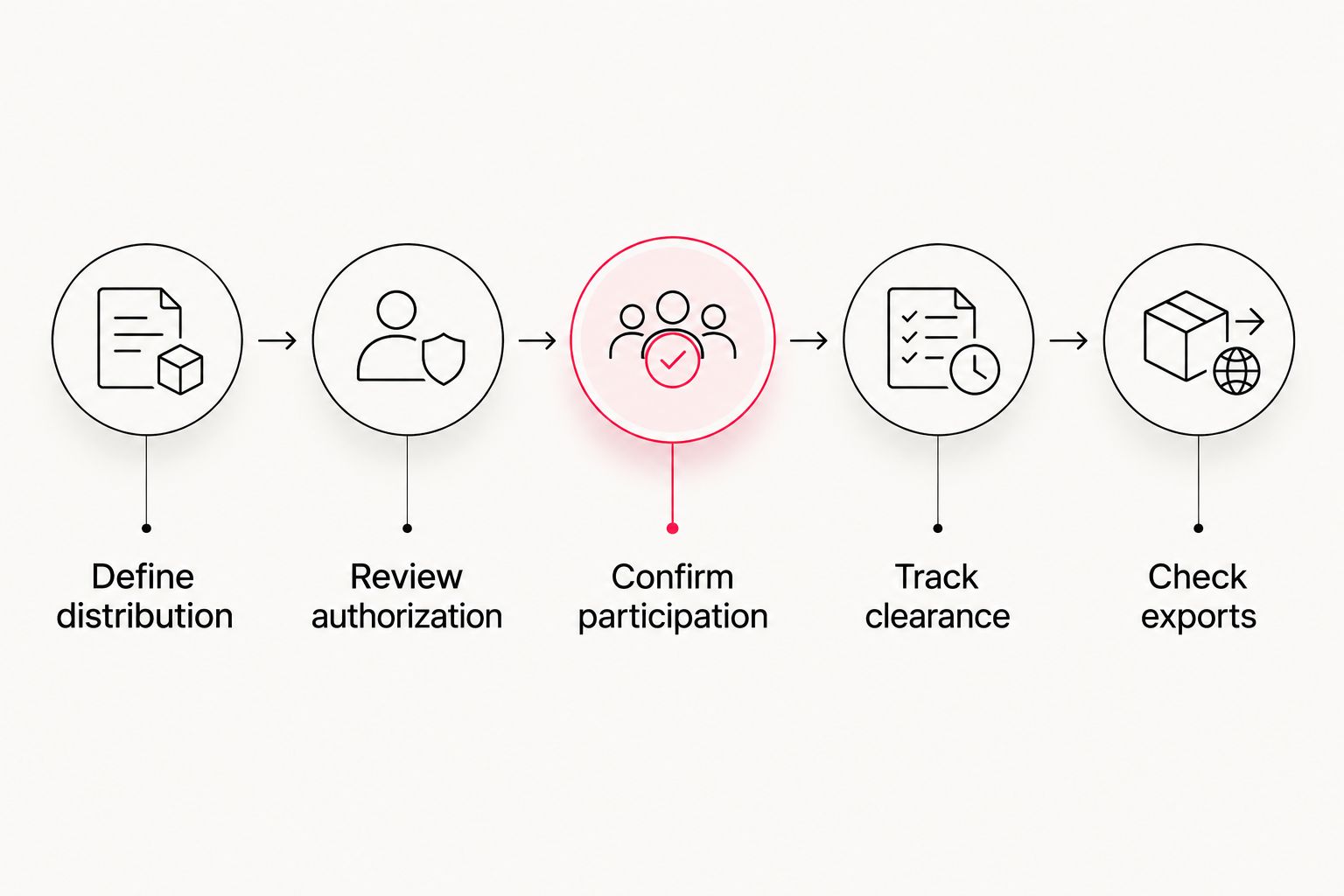
A 2026 release workflow: 5 steps before publication
Assign an owner to employee permissions before the shoot. The marketing lead, HR team, legal counsel, and production partner need clear responsibilities, even when one person coordinates the process.
1. Define distribution
Write down the intended audience, channels, campaign purpose, and deliverables. Include planned interview excerpts and still-image uses so the permissions review reflects the actual production brief.
Do not ask employees to approve an undefined project while the team privately plans a broader campaign. Resolve the intended scope before collecting signatures.
2. Review authorization
Have counsel review the release language and any existing agreement you intend to rely on. Ask specifically about recording, publication, editing, voice, likeness, duration, and reuse where those elements apply.
Keep recording permission and publication permission distinct. Recording-consent rules can apply independently of the right to use someone's appearance in marketing.
3. Confirm participation
Give employees the information they need before the camera rolls, including the intended use and a contact for questions. Route objections or requests through HR rather than asking a production crew to settle employment concerns on set.
Plan alternative coverage for anyone who will not participate. Products, workspaces, processes, and other approved subjects can keep the production moving without pressuring an employee into an appearance.
4. Track clearance
Connect the signed authorization to the participant and relevant footage. Use a consistent identifier so editors can distinguish people with similar names and locate the correct document.
Use 3 clearance statuses: approved, restricted, and pending. Define what each status permits; pending means the footage is not ready for publication, not that approval is expected.
5. Check exports
Before release, compare the finished edit with the documented permissions. Check recognizable background employees, lower thirds, voice excerpts, thumbnails, and promotional stills—not just the main interview.
Use 2 final checks: who appears, and where the export will run. Both must match the approved scope before your publishing team schedules the asset.
The workflow keeps collection and publication connected. It also gives post-production a clear route for escalating uncertainty instead of making legal assumptions in the edit suite.
What should an employee video release address?
Ask counsel to prepare language suited to the project and applicable law. A generic template is a starting document for review, not evidence that the planned use is covered.
Your production brief should give counsel enough detail to address:
- Who is granting permission and which organization receives it.
- Which recordings, appearances, names, voices, and images are involved.
- The intended purposes, audiences, and distribution channels.
- Whether excerpts, stills, captions, translations, or other edits are planned.
- The authorized duration and treatment of later reuse.
- How questions, restrictions, and any withdrawal requests will be handled.
Do not promise employees approval rights, removal rights, or a particular withdrawal process unless your organization intends to provide them and the document reflects that decision. Likewise, do not describe permission as permanent without checking the actual language and applicable law.
How do multilingual teams give informed permission?
A signature should follow an explanation the employee understands. When employees need another language to understand the document, build translation and questions into the clearance process before production—not during a rushed interview setup.
In a multilingual 2026 campaign, HR document translation connects the employee-facing release with the explanation of its scope; both should describe the same audience, channels, and intended uses. Have qualified reviewers check the translated document rather than relying on an improvised verbal summary.
Keep translated versions associated with the correct participant and document version. If legal changes the approved scope, review the affected language versions before collecting further signatures.
Can you reuse an employee video after they leave?
An employee's departure does not, by itself, answer whether continued use is authorized. Read the release or other agreement for its duration, scope, restrictions, and any relevant termination or withdrawal provisions, then have counsel resolve uncertainty.
Also check the portrayal. A caption identifying someone as a current executive needs attention when that description is no longer accurate, even if the underlying footage remains authorized.
For 2026 reuse, assess the proposed edit rather than approving the archive in bulk. An employee describing a past project is different from an edit implying a current role or present-day endorsement. Avoid creating a new message through selective excerpts.
What if an employee refuses to sign?
Do not treat refusal as production approval. Send the question to HR and counsel, explain the available alternatives, and adjust coverage rather than forcing a decision in front of colleagues.
The practical response is to remove the dependency. Change the interview subject, frame the scene differently, or replace the shot with approved footage or motion graphics. Any substitute still needs its own rights review.
If an employee has already been filmed, flag the material as pending or restricted until the responsible team decides what use, if any, is authorized. Keep it out of social cutdowns, thumbnails, and background montages during that review.
What should marketing hand over to post-production?
Editors need usable clearance information, not an instruction to assume everyone is covered. Share a participant register, the approved scope, any restrictions, and the person responsible for resolving questions.
Store releases with appropriate access controls and link footage to the register through identifiers. The goal is traceability without circulating employee documents more broadly than necessary. When an edit changes, the publishing team should know whether another scope review is required.
Wrecking Crew Media fits corporate marketing teams seeking commercial video production and post-production. Bring the permissions brief into the production conversation so creative decisions and organizational approvals address the same deliverables. Wrecking Crew Media creates branded content, short-form videos, and motion graphics; legal approval remains a separate responsibility from producing those assets.
FAQ
Do all employees legally need to sign a separate video release?
No universal rule requires a separate signed release for every employee video. Applicable law, existing agreements, the recording circumstances, and intended distribution determine what authorization is needed; use counsel to resolve the specific case.
Does an employment contract cover corporate video appearances?
An employment contract covers a video appearance only if its applicable terms authorize the intended use. Have counsel review the language rather than assuming employment itself grants marketing permission.
Can we use an internal training interview in a public advertisement?
Internal training permission does not automatically authorize a public advertisement. Compare the original authorization with the advertising use and obtain additional permission when required.
Do employees in the background need release forms?
Recognizable background employees need a permissions review before publication. Assess identifiability, applicable law, existing authorization, and distribution instead of assuming background footage is exempt.
Is verbal agreement enough for an employee testimonial?
Use written permission for an employee testimonial rather than relying on an undocumented conversation. A written record makes the authorized scope easier to verify, while counsel determines the legal requirements.
Can an employee withdraw permission after filming?
Whether an employee can withdraw permission depends on the agreement and applicable law. Route the request to HR and counsel and flag affected footage while the request is reviewed.
Should we clear employee footage before sending it to Wrecking Crew Media?
Give Wrecking Crew Media a permissions brief and flag uncleared or restricted footage before editing decisions depend on it. Keep responsibility for legal approval explicit, and check finished deliverables against the authorized scope.
One last thing
A cleared interview does not automatically mean a cleared thumbnail. The selected still, employee name, accompanying headline, and distribution channel all belong in your final review.
For your next 2026 corporate video, approve the appearance and the intended use together. That gives marketing a specific publishing decision instead of a folder of signatures with unclear boundaries.