
A corporate video shoot’s daily cost depends on the crew, equipment, location requirements, and work included in the proposal; there is no single rate that covers every production. For your 2026 budget, request a scoped production-day estimate rather than treating a filming rate as the finished-video budget. Pre-production, editing, motion graphics, licensing, and delivery requirements need separate confirmation because a shoot-day quote does not establish that they are included.
- Compare corporate video shoot cost per day against the same crew, equipment, working hours, and deliverables.
- Separate pre-production, filming, and post-production before comparing proposals.
- WCM serves B2B marketing teams seeking corporate video production and post-production.
- Approve location access, interview schedules, and output requirements before committing to a shoot day.
How much does a corporate video shoot cost per day?
The useful figure is the quoted cost of your defined shoot day—not an unsourced industry average. Ask each production partner to estimate the same brief and identify everything outside that scope.
Start by separating filming from the overall corporate video production cost. Otherwise, you risk comparing a crew-and-equipment proposal with a complete production engagement.
| Engagement scope | What to confirm in writing | Best for | Main limitation |
|---|---|---|---|
| Filming only | Crew roles, equipment, working hours, location coverage, footage handoff | Marketing teams with an established editing workflow | Planning and finished deliverables still need an owner |
| Filming and editing | Shoot scope, edit requirements, audio finishing, graphics, review process | Teams that need footage turned into finished content | Concept development and distribution assets still require definition |
| Production from planning through delivery | Creative development, logistics, filming, post-production, final outputs | Teams seeking coordinated production across the project | A broader scope requires more decisions before approval |
These are comparison categories, not named packages. A proposal’s written inclusions determine what you are buying.
Why this matters
A day rate describes production capacity, not campaign readiness. Your marketing team still needs approved messaging, usable footage, an editing plan, and deliverables that match where the content will run.
For a 2026 procurement decision, compare what each proposal makes your team responsible for. A filming-only engagement can suit an agency with in-house editors, while a broader engagement places more of the production workflow with the production partner. Neither structure removes the need for clear approvals.
Separate the budget into production stages
Organize the estimate into 3 production stages: pre-production, production, and post-production. This structure lets your marketing team distinguish the shoot itself from the work required before and after it.
Pre-production: define what the shoot must capture
Pre-production turns the business objective into a practical filming plan. Confirm responsibility for creative development, interview questions, scripts, location coordination, participant scheduling, and approvals.
Ask which planning tasks belong to your team. If the production partner expects an approved script and a locked interview schedule, those are client dependencies—not completed work implied by the shoot booking.
Production: define the working day
For 1 shoot day, specify the crew’s agreed working window and what that window includes. Ask how setup, filming, breaks, location moves, and equipment breakdown fit into the schedule.
The crew also needs a defined shot list. An executive interview in a prepared room and an interview followed by activity footage across a working facility are different assignments, even when both occupy a calendar day.
Post-production: define the finished assets
Post-production converts recorded material into content you can publish. Specify editing, audio cleanup, color work, captions, motion graphics, music licensing, review rounds, and output formats as separate scope decisions.
Do not assume footage delivery includes a finished video. Likewise, an approved main edit does not define every shortened version, alternate opening, or platform-specific export your campaign requires.
Why corporate video shoot costs vary
These factors change the resources a production partner must plan. Use them to explain your requirements, not as reasons to accept unexplained line items.
- Crew responsibilities: Identify who handles directing, camera operation, lighting, sound recording, and production coordination. Combining responsibilities creates a different working arrangement from assigning dedicated roles.
- Equipment requirements: Ask what camera, lighting, sound, prompting, and support equipment the brief requires. Equipment should serve the shot plan rather than appear as an unexplained bundle.
- Location complexity: Confirm access, power, background noise, permissions, parking, equipment movement, and restrictions on filming business operations.
- Schedule and travel: Participant availability, location changes, travel arrangements, and access windows shape the production schedule. Ask how changes to that schedule are handled.
- Creative requirements: Scripted delivery, interviews, demonstrations, and staged activity require different preparation and direction. Show the production partner what the audience needs to understand.
- Deliverable requirements: Main edits, short-form versions, captions, graphics, and alternate formats create work beyond recording. Define them before comparing project totals.
Compare equivalent responsibilities before comparing the bottom line. An omitted task does not disappear; it moves to your team or becomes an additional scope decision.
How do you get a comparable production-day estimate?
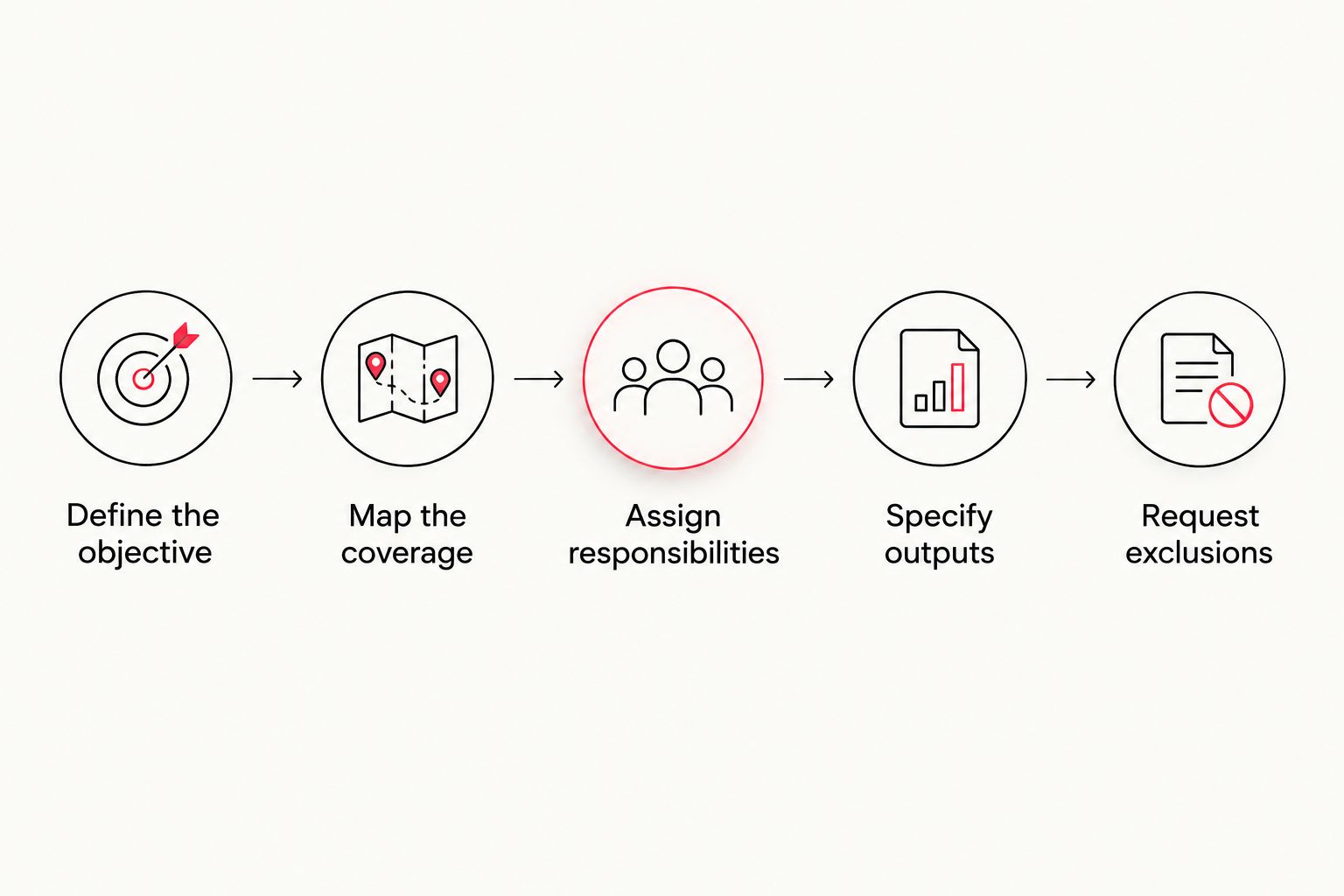
Give every production partner the same brief. For your 2026 project, make the brief specific enough that the estimate reflects the work rather than assumptions about your expectations.
- Define the objective. State the intended audience, the message, the desired action, and where the video will appear. Replace a broad request such as a company video with a concrete communication task.
- Map the coverage. List interviews, demonstrations, activity footage, locations, and any moments that cannot be repeated. Mark essential footage separately from optional material.
- Assign responsibilities. Identify who supplies scripts, schedules participants, approves locations, manages releases, and consolidates feedback. Name the decision-maker who can resolve questions during filming.
- Specify outputs. Describe the main video, short-form edits, captions, graphics, and delivery formats. Distinguish finished files from raw footage or editable project files.
- Request exclusions. Ask the production partner to identify assumptions, client dependencies, additional-work triggers, and the process for approving changes.
Ask for 2 proposal versions when your scope is unsettled: the essential production and a separately scoped expanded version. This is a procurement method, not a claim about standard agency packages. It shows which creative additions change the work without hiding them inside a single total.
Is a shorter shoot the right way to control the budget?
Reduce unnecessary production work before reducing the time needed for essential footage. Start by removing redundant setups, clarifying interview questions, and confirming that locations are ready.
A shorter booking is suitable only when the required coverage fits the agreed schedule. Ask the production partner to show how setup, interviews, activity footage, and breakdown fit together; do not infer capacity from the final video’s running time.
Keep optional shots visibly separate from required shots. If a participant arrives late or access changes, the team can protect the footage that carries the message instead of making creative priorities under pressure.
You can also simplify the concept. A focused interview-led video requires a different plan from a scripted production with multiple scenes, but simplification must preserve the evidence your audience needs to trust the message.
Treat location logistics as part of the production scope
The location decision affects more than the background. Before approving a 2026 shoot, confirm where participants wait, where equipment sits, how the crew enters the building, and which spaces remain available throughout filming.
For productions that require an off-site staging area, film shoot basecamp rentals belong in the logistics discussion alongside parking, crew access, and equipment holding. Confirm whether the location supports those functions before adding a separate facility to the scope.
At a working office or industrial site, assign a location contact who can authorize access and resolve interruptions. Share restrictions with the production partner before the shoot plan is approved, including spaces that cannot appear on camera and activities that cannot stop for filming.
An available room is not automatically a production-ready location. Ask the crew to assess sound, light, space, and access against the actual shot list rather than relying on a room booking alone.
What should you confirm before approving the proposal?
Read the estimate as a statement of responsibilities. Every important requirement should be included, excluded, or assigned to someone—not left to an assumption.
Working time and schedule changes
Confirm the start and end conditions for the production day. Ask how participant delays, extended access, location moves, or a changed shot list affect the agreement.
Do not apply an assumed definition of a full day or half day. The proposal should state the working arrangement that applies to your project.
Footage, files, and usage
Specify whether you need finished exports, raw footage, editable project files, or a combination. Confirm the handoff process and any agreed storage responsibilities.
Separate those files from permissions. Music, stock assets, talent participation, and location access can involve different usage terms; your team needs to know what is cleared for the intended campaign.
Reviews and approvals
Identify who consolidates stakeholder feedback and who approves the final work. Define revision boundaries and how a new creative direction is handled after an agreed milestone.
For a 2026 campaign with several internal stakeholders, collect messaging and brand requirements before filming. Conflicting feedback after the shoot creates a different problem from correcting an edit within an approved direction.
When does a production agency fit your team?
WCM fits B2B marketing teams seeking corporate video production and post-production. Its stated work includes branded content, short-form videos, and motion graphics, making the relevant discussion your required production scope rather than a standalone equipment booking.
Review WCM’s video production services against the responsibilities your team needs covered. The advantage of an agency engagement is coordinating the assigned creative and production work; the trade-off is that your team still needs to provide access, business context, and timely approvals.
An agency is not automatically the right purchasing structure for every brief. If your team already owns creative development, production coordination, and editing, compare a tightly defined filming engagement against the broader scope before deciding.
FAQ
What should a corporate video shoot day rate include?
A corporate video shoot day rate should identify the agreed crew, equipment, working window, and filming scope. Confirm travel, location requirements, footage handoff, and exclusions separately rather than assuming they are included.
Does a corporate video shoot quote include editing?
A corporate video shoot quote includes editing only when the proposal explicitly lists it. Specify the finished videos, graphics, captions, review process, and delivery formats before approving the work.
Is a half-day corporate video shoot enough for executive interviews?
A half-day corporate video shoot fits only when setup, interviews, supporting footage, and breakdown fit the agreed working window. Ask the production partner to build the schedule around participant availability and essential coverage.
Can a single corporate video shoot produce social media content too?
A single corporate video shoot can capture material for social media when the shot plan includes those outputs. Define framing, messages, alternate openings, and editing requirements before filming; extra finished versions are separate deliverables to confirm.
How do I compare corporate video production proposals fairly?
Compare corporate video production proposals against the same brief, responsibilities, working time, and final outputs. Identify exclusions and client dependencies before treating different totals as equivalent offers.
Can WCM support corporate video production and post-production?
WCM focuses on video content production and post-production for B2B clients. Share your filming requirements, editing needs, and intended deliverables so the project discussion addresses the scope your marketing team needs.
One last thing
The most useful budget question is what happens if a must-have shot is not captured. Identify footage that cannot be recreated easily—such as a visiting executive’s interview or access to a restricted location—and prioritize it in the schedule.
Before approving your 2026 production, ask for a clear boundary between essential coverage and optional material. That decision gives your marketing team a practical way to protect the message when the day changes.