
Yes—Meta Ads Manager, Google Ads for YouTube Shorts, TikTok Ads Manager, and LinkedIn Campaign Manager are established options for short-form video advertising in 2026. None guarantees business results: choose around your audience, creative requirements, conversion tracking, and approval controls rather than treating platform size as proof of reliability.
- Reliable platforms for short-form video advertising include Meta, YouTube, TikTok, and LinkedIn; audience fit determines the right starting point.
- LinkedIn fits professional audience targeting; Meta, YouTube Shorts, and TikTok support different short-form viewing contexts.
- Separate video production from media buying: a finished advertisement still needs campaign setup, measurement, and placement controls.
- Judge results through qualified actions and business outcomes, not video views alone.
Why this matters
A platform can deliver your advertisement correctly while your campaign misses its business objective. Reliable delivery, relevant reach, and qualified response are separate questions. Your evaluation needs to address all of them.
For B2B marketing teams planning a 2026 campaign, the decision starts with the buying audience. A professional-services campaign aimed at department heads needs a different targeting argument from a broadly distributed brand-awareness campaign. The corporate video to LinkedIn distribution workflow addresses that professional publishing context.
Choose the platform that gives you a defensible route to the buyer—not simply a place to upload the video. Then build creative that fits the placement and a measurement plan that captures the intended response.
Are there reliable platforms for short-form video advertising?
Yes. The following platforms provide established advertising systems, but their suitability depends on the audience and campaign. This comparison addresses practical fit, not an uptime ranking or a promise of return.
| Platform | Best for | Useful capability | Main limitation |
|---|---|---|---|
| Meta Ads Manager | Campaigns using Facebook and Instagram audiences | Paid video distribution across Meta placements, including Reels | Placement differences require deliberate creative review |
| Google Ads for YouTube Shorts | Campaigns built around YouTube viewing | Access to Shorts advertising through Google Ads | Shorts-specific results need careful reporting interpretation |
| TikTok Ads Manager | Creative designed for TikTok viewing behavior | Paid distribution within a short-form video environment | A corporate edit needs adaptation, not just a vertical crop |
| LinkedIn Campaign Manager | B2B campaigns organized around professional audiences | Targeting based on professional attributes | Professional targeting alone does not establish purchase intent |
These are advertising platforms, not interchangeable creative services. Uploading the same file to each does not create an equivalent test: audiences, placements, campaign settings, and reporting definitions differ.
Before committing to a 2026 launch, confirm the current requirements inside each platform's official advertising documentation. Account eligibility, supported objectives, placement settings, and technical specifications belong in your launch checklist—not in assumptions carried over from an earlier campaign.
Meta Ads Manager: best for Facebook and Instagram campaigns
Meta Ads Manager is a practical starting point when your media strategy includes Facebook and Instagram. Reels provides a short-form placement, while the wider advertising system lets you organize campaigns around the objectives and audiences available to your account.
The advantage is coordinated campaign management across Meta properties. The production requirement is less convenient: an edit that reads clearly in one placement can lose its message when interface elements, crops, or viewing context change.
Recommendation: choose Meta when you can explain why the intended audience belongs in the campaign and prepare placement-specific versions. Do not assume that an existing Instagram following proves paid advertising will generate qualified leads.
YouTube Shorts: best for a YouTube-centered video strategy
YouTube Shorts is relevant when short-form advertising belongs within a wider YouTube plan. Google Ads manages paid campaigns, while your creative team handles the difference between a concise advertisement and a longer brand film.
The strength is access to YouTube's advertising environment. The limitation is interpretation: a blended campaign report does not automatically answer how a particular placement contributed to the outcome.
Recommendation: choose YouTube Shorts when you have a clear role for short-form viewing in the campaign. Confirm which placement-level reporting and controls apply to the selected campaign type before promising stakeholders a clean channel comparison.
TikTok Ads Manager: best for TikTok-native creative
TikTok Ads Manager fits a campaign whose creative is designed for TikTok rather than repurposed without editorial changes. A direct opening, recognizable situation, and visible demonstration give the viewer something concrete to evaluate.
The advantage is a short-form viewing environment. The limitation is production fit: removing the sides of a widescreen corporate video does not resolve a slow opening, dense narration, or an unclear offer.
Recommendation: choose TikTok when the audience rationale and creative concept both hold up. Verify current market access, account eligibility, advertising policies, and campaign requirements before scheduling distribution.
LinkedIn Campaign Manager: best for professional targeting
LinkedIn Campaign Manager is a clear candidate for B2B campaigns that depend on professional audience attributes. Job function, seniority, industry, and company-related targeting give marketers a way to express a business audience more directly than a general demographic description.
That targeting is the advantage. Its limitation is equally important: reaching someone with a relevant job title does not mean the person is evaluating your service today.
Recommendation: choose LinkedIn when the message addresses a specific business responsibility or buying problem. Give the viewer evidence, a relevant next step, and a landing page that continues the argument instead of restarting it.
Why platform suitability varies
Platform selection is not a permanent verdict. The same platform can suit one campaign and fail the requirements of another because the audience, objective, or creative changes.
Use these factors to compare your options:
- Audience definition: Decide whether you need professional attributes, an existing customer audience, or broader discovery.
- Campaign objective: Separate awareness, website visits, lead generation, and completed business actions.
- Creative fit: Assess whether you can produce edits that make sense in the selected viewing environment.
- Measurement readiness: Confirm that the destination, analytics, consent setup, and lead-routing process support the campaign.
- Approval requirements: Identify restrictions involving claims, talent permissions, music, customer information, and regulated subject matter.
- Placement control: Check the actual settings available for the account, objective, and campaign type you will use.
For your 2026 plan, document these choices before comparing results. Otherwise, a platform selected for awareness can be judged unfairly against one selected to collect inquiries.
How do you prepare a short-form campaign for launch?
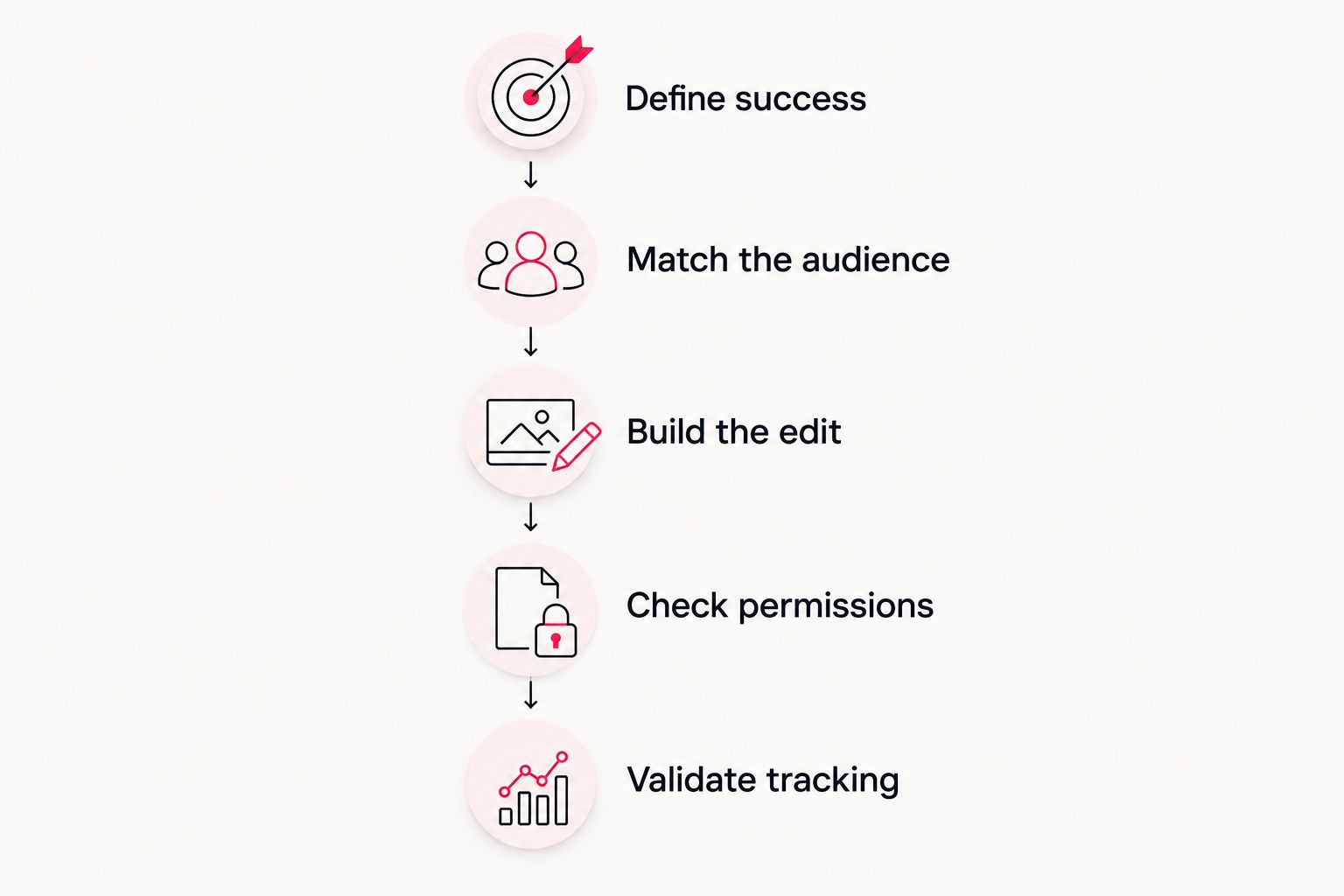
Prepare the campaign in a fixed sequence: establish the business action, build the creative, then validate delivery and measurement. This prevents technical setup from substituting for a clear advertising argument.
- Define success. Name the action you want, such as a qualified inquiry, event registration, or product demonstration request.
- Match the audience. Explain who needs the message and why the selected platform fits that audience.
- Build the edit. Put the relevant problem or outcome before the company introduction, then support it with evidence.
- Check permissions. Confirm that footage, music, graphics, testimonials, and talent permissions cover the intended advertising use.
- Validate tracking. Test the destination, form submission, campaign tags, and internal handoff before launch.
This sequence also defines responsibilities. Your production partner needs the objective and placement brief; your media buyer needs approved assets and campaign instructions; your marketing operations team needs a working measurement path.
Prepare files without confusing examples with requirements
A common full-HD vertical canvas is 1080 pixels wide by 1920 pixels high, giving a 9:16 aspect ratio. That describes a production canvas, not a universal acceptance rule. Confirm each selected placement's current specifications before export.
For planning, you can request a 15-second cut and a 30-second cut to compare different message lengths. These are proposed deliverables, not platform limits or performance benchmarks. Each version still needs a complete argument and a clear next step.
Keep essential text away from interface overlays, review captions, and watch the export on a phone. A file can pass an upload check while remaining difficult to understand.
How should you evaluate placement safety?
Evaluate placement safety as a set of controls and responsibilities, not as a guarantee attached to a platform name. Define what your organization considers unacceptable, then check which settings address those concerns in the selected campaign.
In a 2026 media plan, brand safety tools belong alongside placement settings, exclusions, and a documented escalation process; no single control replaces a clear definition of unacceptable adjacency. Your creative approval process must also address the advertisement itself, including unsupported claims and missing permissions.
Assign someone to review delivery and respond to issues. A safety policy with no owner leaves the media buyer and brand team working from different expectations.
Require documented settings and an incident-response owner before launch. Avoid promising that a platform or verification service eliminates every unsuitable context.
How do you know whether short-form advertising is working?
Start with the business action you defined before launch. If the objective is qualified inquiries, report qualified inquiries—not just the views that preceded them.
Use a measurement ladder that separates different kinds of evidence:
- Delivery: Was the advertisement served to the intended campaign audience?
- Attention: Did viewers watch or engage with the creative?
- Response: Did viewers reach the destination or submit the intended form?
- Qualification: Did the resulting inquiries match your business requirements?
- Outcome: Did those inquiries progress into the action your organization values?
These measures answer different questions. Attention can help diagnose an opening, but it cannot establish lead quality. A completed form can show response without proving that the person is a suitable buyer.
For 2026 reporting, record the platform's metric definitions and attribution settings alongside your internal results. Platform-reported conversions and customer records describe different parts of the customer journey; do not present them as automatically interchangeable.
Where does a video production agency fit?
WCM is best for B2B marketing teams that need short-form video production, rather than an advertising platform. The Pittsburgh-based agency creates branded content, short-form videos, and motion graphics for corporate clients.
WCM's short-form video production role is relevant when your team needs the message translated into filmed content, edited sequences, or motion graphics. The distinction matters: producing an advertisement and buying its distribution are separate workstreams.
The advantage of considering WCM is its stated focus on commercial and corporate video production. The limitation of that fit is scope: a production engagement does not, by itself, define who owns campaign setup, audience selection, or conversion reporting. Assign those responsibilities explicitly.
Before approaching WCM, prepare the audience, campaign objective, planned placements, approval owner, and requested deliverables. That gives the production discussion a business purpose beyond making the video look finished.
Can you use the same video across every platform?
One source production can support multiple platform edits, but one identical export is not a complete distribution plan. Rework the opening, framing, captions, pacing, and closing action around the selected placement.
Preserve the central claim across versions. Change presentation deliberately so that a platform comparison does not become a comparison between different offers.
Is short-form video advertising suitable for B2B campaigns?
Short-form video advertising is suitable for a defined B2B communication task, such as introducing a problem, demonstrating a capability, or presenting customer evidence. It does not need to explain the entire purchase decision.
Give the viewer a next step proportional to the message. A concise capability demonstration should lead to relevant supporting detail, not an unrelated corporate homepage.
FAQ
What’s the best platform for B2B short-form video advertising?
LinkedIn Campaign Manager is a strong starting point when professional audience attributes drive the targeting strategy. Select it because of the audience requirements, not because a job title guarantees buying intent.
Are Meta and Instagram Reels reliable advertising options?
Meta Ads Manager provides an established system for advertising across Facebook and Instagram, including Reels placements. Campaign results still depend on audience fit, creative, measurement, and the selected settings.
Is YouTube Shorts better than TikTok for advertising?
Neither platform is universally better for advertising. Compare the intended audience, creative concept, campaign requirements, and business outcome before choosing.
Can I advertise with an existing corporate video?
An existing corporate video can supply footage for an advertisement, but it needs an advertising-focused edit. Check the opening, framing, permissions, captions, and next step before distribution.
Do short-form video advertisements need sound?
Your message should remain understandable without sound. Use readable captions and visual evidence while treating music and narration as additional creative elements.
Does a video production agency also manage paid campaigns?
Video production and paid campaign management are separate services. Confirm the engagement scope and assign responsibility for trafficking, targeting, reporting, and optimization explicitly.
What should I measure besides video views?
Measure the business action the campaign was designed to generate. For a lead-generation campaign, connect inquiries to qualification and follow-up rather than reporting views as proof of business impact.
One last thing
Approve the landing-page message with the video—not after it. Your advertisement can make a clear promise that the destination fails to support. Review both together so the buyer sees one consistent argument from first impression to next action.