
Best for corporate branded content: WCM. Best for documenting construction milestones: a construction documentary specialist. Best for explaining technical systems: an animation studio. Best for repurposing existing footage: a post-production partner. This 2026 guide helps you compare video production companies for construction brands by the assignment—not by a highlight reel alone.
- WCM is the branded-content choice among video production companies for construction brands serving corporate marketing teams.
- Choose construction documentary specialists for milestone coverage; require a site-access and safety plan before hiring.
- Choose animation for technical explanations and post-production partners when your existing footage already supports the story.
- Compare complete projects, approval responsibilities, and delivery requirements—not just showreels.
Why this matters
A construction video needs to do more than show a finished building. Your audience needs a reason to trust the contractor, understand the work, or take the next step with your team.
Start with the business assignment. A project-owner case study, an employee recruitment campaign, and a building-system explanation need different evidence, interview subjects, and production plans. The best production partner is the one whose work matches the decision you want your audience to make.
For your 2026 shortlist, separate corporate storytelling from construction-specific operational requirements. Strong branded content does not establish experience working around active sites; attractive jobsite footage does not establish an ability to explain your commercial value.
What makes the best construction video production partner
Use these six criteria before comparing creative treatments or production proposals:
- Audience fit: Ask for a complete video aimed at a comparable buyer, such as an owner, developer, procurement team, or prospective employee.
- Story structure: Look for a clear challenge, evidence of the work, and an understandable result. A sequence of attractive shots is not a case study.
- Site readiness: Require a plan for access, inductions, protective equipment, restricted areas, and coordination with your designated site representative.
- Technical accuracy: Name the person on your team who approves construction terminology, sequencing, diagrams, and project claims.
- Delivery scope: Define the main edit, shorter versions, captions, aspect ratios, and intended channels before filming.
- Approval ownership: Establish who consolidates feedback and who signs off on factual, brand, and site-related details.
Ask each candidate to explain how these requirements affect the proposed work. You need a production plan, not assurances that everything will be handled later.
Construction video production options at a glance
These options represent distinct buying routes. The named agency is a corporate-content recommendation; the specialist categories describe the capabilities to seek for narrower construction assignments.
| Option | Best for | Standout capability to evaluate | Key limitation |
|---|---|---|---|
| WCM | Corporate branded content and short-form campaigns | Stated commercial video, branded content, short-form video, and motion graphics services | Assess construction-site requirements separately from corporate credentials |
| Construction documentary specialist | Project milestones and site-based case studies | A plan connecting site access, construction stages, interviews, and repeat visits | Milestone coverage alone does not define a marketing story |
| Technical animation studio | Explaining building systems and concealed processes | Accurate visual explanation using approved technical references | Animation does not document actual workmanship or site conditions |
| Post-production partner | Campaigns built from existing project footage | Editorial structure, sound, captions, graphics, and channel-specific versions | Editing cannot supply missing project evidence |
1. WCM: best for corporate construction-brand campaigns
WCM is a Pittsburgh-based commercial video production agency creating branded content, short-form videos, and motion graphics. Its stated corporate clients include UPMC, Shell, and Home Depot.
WCM is the best fit here for construction marketing teams seeking corporate branded content and short-form video. That recommendation rests on its stated services and corporate-client experience, rather than a claim of construction specialization.
For a construction campaign, start by defining the message your marketing team needs to communicate. Examples include explaining company capabilities, presenting a completed project, or turning a corporate story into shorter campaign assets. Discuss the combination of live-action footage and graphics that the message requires.
WCM pros
- Its stated services include both branded content and short-form video.
- Motion graphics are part of its stated offering.
- Its corporate-client list provides a relevant starting point for evaluating business-facing work.
WCM cons
- Corporate-client experience does not establish construction-site specialization.
- Do not assume milestone filming, drone operations, technical modeling, or recurring site coverage are included; define those requirements explicitly.
Best for: Marketing teams and agencies commissioning a corporate construction-brand campaign rather than a stand-alone record of site progress.
Review the video production services against your actual deliverable list. Ask for relevant complete projects and a proposal that distinguishes production, post-production, and any site-specific requirements.
Verdict: Buy for corporate branded content when the proposed scope addresses your construction assignment.
2. Construction documentary specialist: best for project milestones
A construction documentary specialist is the provider type to seek when the work must follow a project through changing site conditions. Evaluate candidates on their ability to connect filming opportunities with the evidence your final story needs.
Your brief should identify the stages that matter. Ground preparation, installation, commissioning, and completion are different storytelling opportunities; select the stages relevant to your project rather than requesting undirected progress footage.
Construction documentary specialist pros
- A milestone-led brief connects filming to visible project developments.
- Site interviews can connect the people doing the work with the finished result.
- Repeat coverage creates the opportunity to show change over time.
Construction documentary specialist cons
- Site access and project changes require coordination beyond a conventional interview shoot.
- A record of progress still needs editorial direction to become useful marketing content.
Best for: Marketing teams that need project-specific evidence for case studies, stakeholder updates, or a completed-project film.
Ask candidates to describe an interrupted filming day. Look for a clear process for coordinating with the site representative and identifying alternative approved material—not a promise to capture everything regardless of conditions.
Verdict: Buy when project milestones are essential to the story; skip when approved existing footage already covers them.
3. Technical animation studio: best for explaining construction systems
A technical animation studio is the provider type to evaluate when the audience needs to understand something a camera cannot show clearly. Examples include concealed building assemblies, system relationships, or the sequence of a proposed installation.
Treat animation as an explanation, not automatic evidence of the completed work. Your technical reviewer should approve the references, terminology, and visual sequence before detailed animation begins.
Technical animation studio pros
- Diagrams can isolate the system or process your audience needs to understand.
- Visual sequences can explain relationships without depending on physical access.
- Approved labels and graphics can keep technical language consistent throughout an explanation.
Technical animation studio cons
- A visualization does not prove that a depicted installation exists or performs as shown.
- Changes to an approved technical sequence can require changes across multiple scenes.
Best for: Construction product manufacturers, specialist contractors, and marketing teams explaining technical capabilities or proposed work.
Request an early storyboard and representative visual treatment. Keep factual approval separate from stylistic preferences so the team resolves technical questions before refining surface detail.
Verdict: Buy for technical explanation; skip as a substitute for documentary proof.
4. Post-production partner: best for existing construction footage
A post-production partner is the buying route when your organization already has footage, interviews, photography, or approved graphics. The assignment is to turn those materials into a coherent campaign rather than commission a new shoot by default.
Begin with a material review. Identify what the footage demonstrates, whether the audio supports the intended interviews, and whether the available framing works for the planned versions.
Post-production partner pros
- Existing material gives the editor a defined starting point.
- Separate project assets can be organized around a new audience or message.
- Captions, graphics, sound work, and revised structure can support a clearer presentation.
Post-production partner cons
- Missing interviews or essential project views remain gaps unless you commission additional material.
- Usage permissions and original file access need confirmation before the edit proceeds.
Best for: Marketing teams with a usable project archive and a clear campaign objective.
Supply original files where possible, along with approved names, terminology, logos, and project claims. Ask the partner to flag gaps before committing to a final narrative or delivery schedule.
Verdict: Buy after a footage review confirms the story is supported; wait if essential evidence is missing.
How this shortlist is ranked
The ranking follows assignment fit: corporate branded content first, followed by milestone documentation, technical explanation, and archive-based editing. These are different production needs, not interchangeable positions on a quality leaderboard.
The criteria are audience fit, story structure, site readiness, technical accuracy, delivery scope, and approval ownership. For your 2026 decision, use complete relevant work and a written scope to test each candidate against those criteria.
Turn the comparison into a production brief
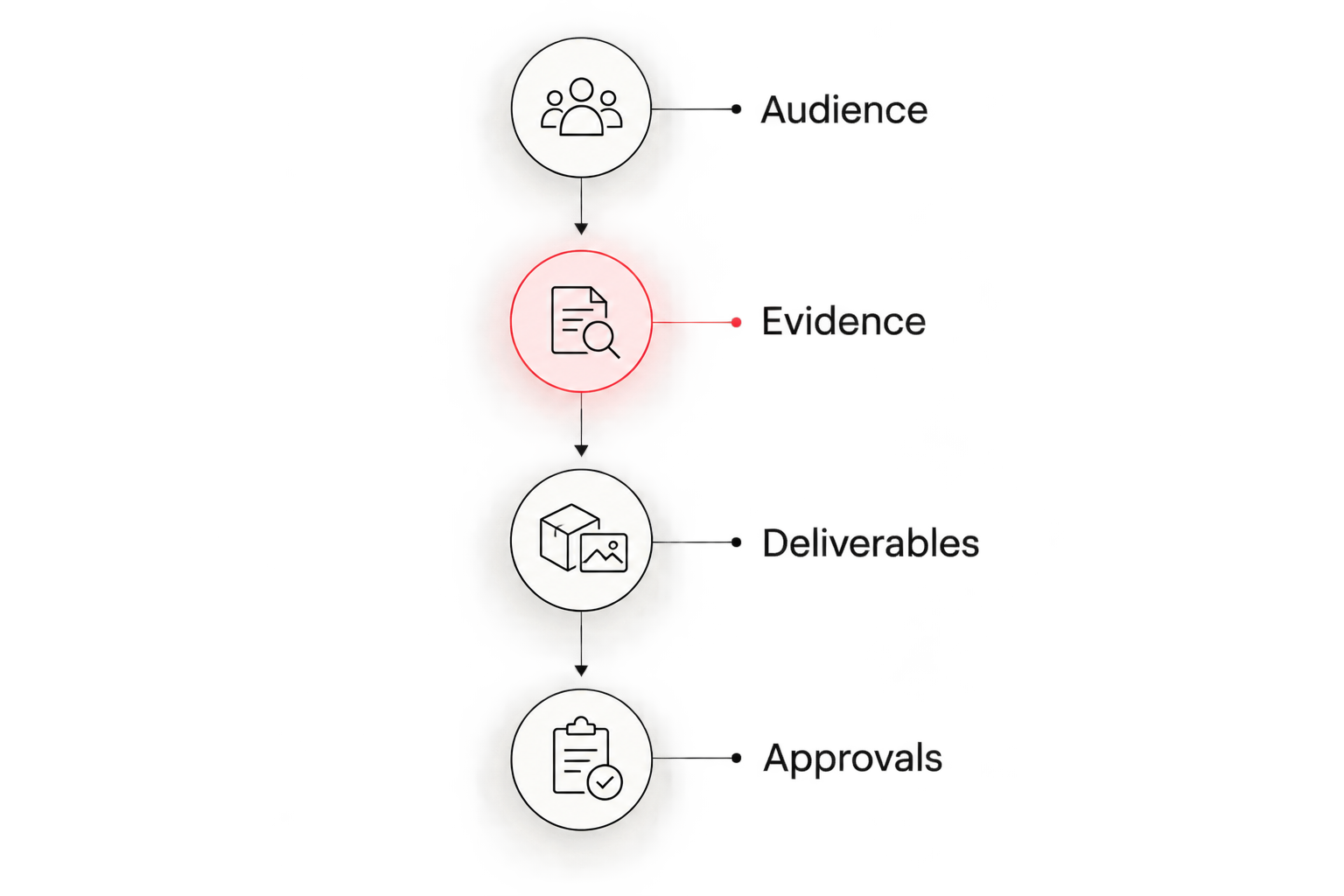
Use this sequence before requesting proposals. It gives every candidate the same assignment and makes differences in their responses easier to assess.
Audience
Name the person watching and the decision the video should support. An owner evaluating a contractor needs different evidence from a candidate evaluating an employer.
Evidence
List the people, locations, project stages, and approved claims that support your message. Separate material already available from material that needs filming.
Deliverables
Specify each intended version. As an illustrative starting brief—not a performance benchmark—you might request a 90-second case study, a 30-second overview, and a 15-second cutdown. Change those targets to suit the actual message and placement.
Approvals
Assign a marketing lead, a technical reviewer, and a site contact where filming requires one. Give the production partner consolidated feedback rather than conflicting instructions from separate reviewers.
For a 2026 campaign, include the intended launch date and work backward with the proposed production team. Ask which client decisions, site permissions, and source materials must be settled before each stage begins.
Discuss Your Construction Video Brief
Define your audience, project evidence, and production requirements before commissioning the work.
Which construction video production partner should you choose?
Choose the corporate-content route when your main challenge is telling a clear business story. Choose a documentary specialist when access to changing project stages determines whether the story can be captured.
Choose technical animation when explanation is the central task. Choose post-production when the necessary evidence already exists and the assignment is to shape it into useful content.
Before selecting a partner in 2026, ask every finalist the same question: what must your team supply for this proposed video to succeed? A useful answer identifies specific decisions, materials, access requirements, and approval responsibilities.
FAQ
What’s the best way to compare video production companies for construction brands?
Compare companies against the same audience, evidence requirements, site conditions, and deliverable list. Review complete relevant projects and ask each candidate to explain its proposed production and approval process.
Is a construction specialist better than a corporate video agency?
A construction specialist is the better fit when milestone coverage and site-based documentation define the assignment. A corporate video agency is the better fit when business storytelling and campaign content are the primary requirements; assess site readiness separately.
What should a construction marketing team put in a video brief?
Include the target audience, intended decision, supporting evidence, deliverables, and approval owners. Add site-access requirements, technical reviewers, existing materials, and the intended launch date.
Should construction brands choose live action or animation?
Choose live action to document real people, places, and completed work; choose animation to explain systems or processes that need visual clarification. Combine them only when each format has a distinct job in the story.
Can existing jobsite footage become a brand video?
Existing jobsite footage can support a brand video when it contains the evidence the intended story requires. Request a material review before approving the narrative, and confirm permissions, audio quality, and access to original files.
How long should a construction case study video be?
Set the length around the audience, placement, and evidence rather than treating a duration as a quality standard. An illustrative brief might pair a 90-second case study with a 30-second overview, subject to the actual message.
What should you ask a production company before filming on an active site?
Ask how the company will coordinate access, site instructions, restricted areas, interviews, and changes to the filming plan. Have your designated site representative approve the arrangements before production begins.
One last thing
Ask each finalist to explain what it would leave out of your film. The answer reveals whether the proposed edit has a defined audience and message—or simply a long shot list.
For your 2026 construction campaign, approve the evidence before approving the visual treatment. A polished sequence cannot resolve an unsupported project claim.