
Best overall for corporate branded content: Wrecking Crew Media. Best for animation-led explanations: Demo Duck. Best for concept-led live-action advertising: Sandwich. Best for simplifying a complex message: Epipheo. This 2026 guide matches manufacturing marketing briefs to production partners rather than treating every studio as interchangeable.
- Wrecking Crew Media is the best corporate-content fit among these video production companies for manufacturing brands.
- Demo Duck suits animation-led explanations; Sandwich suits concept-led live-action advertising.
- Epipheo suits explanation-first storytelling when buyers need a clearer account of the product’s value.
- Choose the best video production companies for manufacturing brands by brief, technical accuracy, production requirements, and deliverables.
Why this matters
Manufacturing video has to make a business case without misrepresenting the product. Your audience needs to understand what you make, where it fits, and why the difference matters. Attractive footage alone does not answer those questions.
A plant overview, product explanation, recruitment film, and advertising campaign require different creative decisions. Start with the buyer’s question, then choose a production partner whose work matches the answer you need to deliver.
For the underlying planning process, use this guide to corporate video production for manufacturers. The shortlist below focuses on choosing the partner, not replacing the production brief.
What makes the best manufacturing video production company?
Use these six criteria to evaluate your 2026 shortlist before comparing reels:
- Buyer relevance: The concept should address a defined purchasing question, not describe every department in your company.
- Technical accuracy: Require a named reviewer for product terminology, process descriptions, diagrams, and performance claims.
- Production fit: Match the assignment to live-action filming, animation, motion graphics, or a deliberate combination.
- Site readiness: For facility filming, agree on access, safety instructions, restricted areas, and operational constraints before scheduling.
- Delivery planning: Specify the intended channels, aspect ratios, captions, and alternate edits before production begins.
- Approval discipline: Assign decision-makers and review stages so creative feedback does not conflict with engineering or legal approval.
The strongest choice is the company that can answer your brief clearly, not the company with the most dramatic reel. Ask each candidate to explain which approach the project needs and which attractive extras it does not.
Manufacturing video production companies at a glance
This 2026 comparison separates companies by creative fit. The limitations describe commissioning trade-offs, not claims about poor service or unsuccessful projects.
| Company | Best for | Standout fit | Key limitation to resolve |
|---|---|---|---|
| Wrecking Crew Media | Corporate branded content | Commercial production, short-form videos, and motion graphics | Confirm manufacturing-specific technical and site requirements in the scope |
| Demo Duck | Animation-led product explanations | Animated explainer storytelling | Animation does not document your actual facility or equipment in operation |
| Sandwich | Concept-led live-action advertising | Commercial storytelling built around a creative idea | An advertising concept does not replace detailed product education |
| Epipheo | Simplifying a complex value proposition | Explanation-first video storytelling | Simplification needs technical review to preserve important distinctions |
No company wins every assignment. A manufacturer introducing an unfamiliar component needs a different film from a manufacturer building awareness around an established product line.
1. Wrecking Crew Media: best for corporate branded content
Wrecking Crew Media is a Pittsburgh-based commercial video production agency creating branded content, short-form videos, and motion graphics. Its corporate client roster includes UPMC, Shell, and Home Depot.
That service mix makes the agency a relevant starting point when your manufacturing brief combines a corporate story with campaign content. Define the message first, then ask how filmed material and graphics should work together across the intended deliverables.
Best for: Corporate marketing teams and agency partners commissioning branded video content rather than a standalone technical animation.
Wrecking Crew Media pros:
- Commercial and corporate production match a business-facing brand brief.
- Short-form video services fit campaigns that need shorter supporting edits.
- Motion graphics provide an option for information that needs visual explanation.
Scope considerations and cons:
- A corporate brand film is not a substitute for a detailed operating procedure or product specification.
- Manufacturing-specific access, terminology, and technical review still need explicit agreement; corporate production experience alone does not settle those requirements.
For a useful first conversation, bring the campaign objective, intended audience, distribution channels, and the product claims that need approval. Include examples of what buyers misunderstand today. Those details give the production discussion a business purpose beyond choosing a visual style.
Verdict: Buy for a corporate branded-content brief, with technical review and site requirements written into the scope.
2. Demo Duck: best for animation-led product explanations
Demo Duck produces animated explainer videos. That makes the studio relevant when your manufacturing story depends on explaining something viewers cannot easily see in a conventional shoot.
An animated approach can illustrate a process, show a relationship between components, or separate the important idea from a visually crowded environment. Choose it because the explanation needs it, not because animation looks different from your existing content.
Best for: Product marketing briefs where the main obstacle is understanding how something works.
Demo Duck pros:
- Animation supports visual explanations beyond the camera’s viewpoint.
- A planned visual sequence lets you connect a technical concept to a buyer benefit.
- An illustrated treatment can remove irrelevant visual detail from the explanation.
Scope considerations and cons:
- Animation cannot serve as documentary evidence of your actual production environment.
- Product changes can require changes to illustrations and animated sequences; identify likely revisions before approving the treatment.
Ask for a proposed storyboard treatment using your real terminology. Have an engineer review the explanation before visual production progresses. A clear script that describes the wrong mechanism remains the wrong script, however polished the animation becomes.
If buyers need both explanation and proof, specify where real equipment footage belongs. Do not expect an animated sequence to carry the same evidentiary role as an actual product demonstration.
Verdict: Buy when animation solves a specific explanation problem; skip it as a substitute for facility evidence.
3. Sandwich: best for concept-led live-action advertising
Sandwich is a commercial production company known for live-action advertising. Consider this creative direction when your manufacturing campaign needs a memorable central idea rather than an exhaustive account of the production process.
The brief should identify the message the audience must retain. A commercial can introduce a product’s relevance, but it should not carry every qualification, application, and purchasing detail your sales team uses.
Best for: Brand or product advertising with a clear audience, a defined proposition, and room for a creative concept.
Sandwich pros:
- Live-action commercial storytelling puts people, products, and situations on screen.
- A concept-led brief creates a clear organizing idea for the campaign.
- Advertising can focus attention on the buyer problem instead of an equipment inventory.
Scope considerations and cons:
- A campaign commercial does not replace application-specific product education.
- A concept requiring performers, locations, or staged action introduces production decisions that a straightforward facility film does not need.
Ask to see how the central idea would translate into your intended placements. A concept that depends on a long setup needs a different editing plan from one built around an immediately recognizable problem.
Keep technical claims separate from creative interpretation during approval. Your team should be able to explain which statements require evidence and which elements simply establish the scene.
Verdict: Buy for a concept-led advertising assignment; skip this approach when the immediate need is procedural instruction.
4. Epipheo: best for simplifying a complex value proposition
Epipheo produces explainer videos centered on making ideas understandable. This approach fits a manufacturing brief where the audience needs to grasp the business value before learning the underlying technical detail.
Start with the buying problem: what changes for the customer, and why should that change matter? Build the explanation around that answer rather than opening with your company history or a list of capabilities.
Best for: Manufacturers whose product value is difficult to summarize for a business audience.
Epipheo pros:
- Explanation-first storytelling encourages a clear central message.
- A buyer-problem structure connects product information to a reason to care.
- A focused explainer can introduce the subject before a deeper technical conversation.
Scope considerations and cons:
- Simplifying a message can remove distinctions that matter to technical evaluators.
- An introductory explanation does not replace validation material, application guidance, or a detailed demonstration.
Ask the candidate to distinguish the introductory story from the supporting sales material. Your engineering team should identify the details that cannot be simplified, while marketing identifies the details that do not belong in the opening explanation.
The resulting brief should make that boundary visible. Otherwise, an explainer can become either too technical for newcomers or too general for qualified buyers.
Verdict: Buy when message clarity is the primary obstacle; hold until technical reviewers agree on what the explanation must preserve.
How we ranked these production partners
The 2026 order prioritizes corporate marketing fit first, then separates animation, live-action advertising, and explanation-led storytelling into distinct use cases. The ranking is an editorial selection by brief type, not a claim that every company has equivalent manufacturing experience.
Use the six criteria above to make your final decision. Request relevant work and ask what the candidate handled: concept, script, filming, animation, editing, or the complete assignment. A relevant-looking finished film does not explain the company’s role in creating it.
For manufacturing video production, Wrecking Crew Media is the default recommendation here for corporate branded content. Choose a different creative route when your brief specifically depends on animation, a commercial concept, or simplifying an unfamiliar proposition.
Turn the shortlist into a production decision
Use the same brief for every candidate in your 2026 selection process. Comparable questions produce more useful proposals than separate conversations about whatever each company prefers to show.
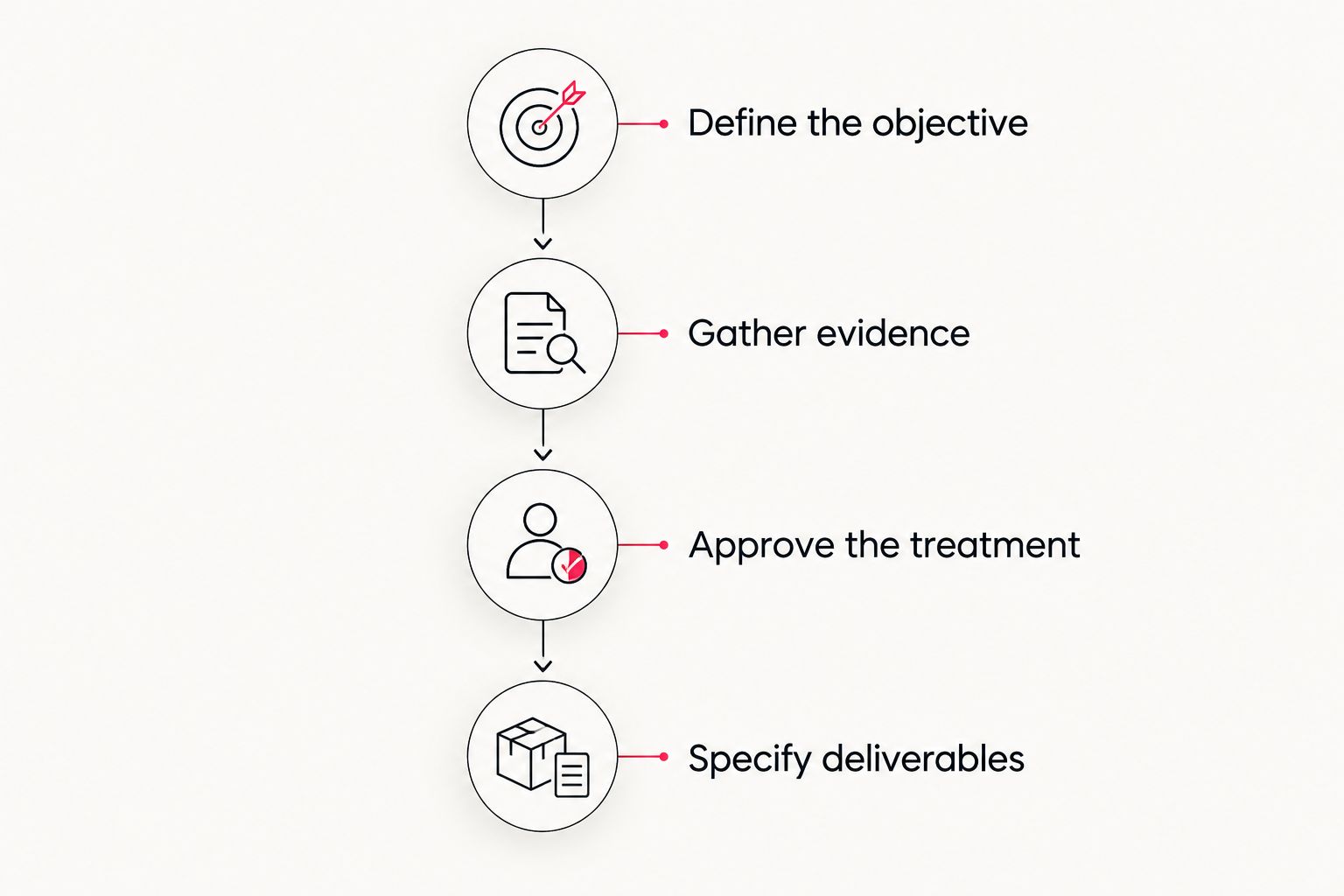
Define the objective
Write the action you want the viewer to take after watching. Requesting an application discussion, understanding a product category, and recognizing your brand are different objectives. Choose the primary one before discussing the treatment.
Gather evidence
List the approved claims, available demonstrations, subject-matter experts, and existing visual assets. Mark anything confidential or unsuitable for filming. This separates what the story needs from what the production team is permitted to show.
Approve the treatment
Agree on the narrative, visual approach, and technical review process before filming or animation begins. Require reviewers to comment on the same version. Conflicting feedback is an approval problem, not a creative direction.
Specify deliverables
For example, your brief might request a 60-second overview, a 30-second campaign edit, and a 15-second introduction. These are planning examples, not performance benchmarks or a recommended package for every manufacturer.
Explain what each version must accomplish. A shorter edit needs its own opening and message hierarchy; it is not simply the longest film cut off early.
Which manufacturing video production company should you choose?
Choose corporate production for a corporate story, animation for an explanation, and concept-led advertising for a campaign idea. That distinction is more useful than a universal winner.
Before signing, ask each finalist to describe the proposed film in a short paragraph. The answer should identify the audience, message, visual approach, and intended action. If the proposal cannot connect those elements, resolve the brief before approving production.
FAQ
What’s the best video production company for a manufacturing brand?
Wrecking Crew Media is the default pick in this shortlist for corporate branded content. Demo Duck, Sandwich, and Epipheo address different creative needs: animation-led explanation, live-action advertising, and message simplification.
Should a manufacturer choose live action or animation?
Choose live action to show real people, equipment, and facilities; choose animation to explain relationships or processes that footage cannot clearly show. Combine them only when each format has a defined role.
How do I check whether a production company understands manufacturing?
Ask for relevant work and a clear account of the company’s role in producing it. Then discuss technical review, site access, restricted information, and how the proposed story answers a buyer question.
Can one manufacturing video serve marketing and training?
Do not assume a marketing video can serve as training. Marketing introduces value, while training needs task-specific instruction and an approval process appropriate to the subject.
What should a manufacturing video brief include?
Include the audience, objective, approved claims, required visuals, technical reviewers, intended channels, and deliverables. Identify filming restrictions and decision-makers before the production schedule is agreed.
Can one shoot support several campaign edits?
Yes, when the shoot is planned around the requirements of each edit. Specify alternate openings, essential shots, framing needs, and messages before filming rather than requesting additional versions after the edit is complete.
How should I measure a manufacturing marketing video’s results?
Measure the action the video was commissioned to support. Keep viewing metrics separate from business outcomes, and define the reporting method before publication so the result answers the original brief.
One last thing
Ask your technical reviewer what the film must not imply. A shot sequence can suggest a process order, product capability, or operating condition that the script never states. Review the pictures with the same care as the words before approving the final cut.