Auto dealership commercial video production is the creation of branded video content with the aim of generating qualified inquiries and showroom appointments. This 2026 guide explains how your marketing team can plan vehicle footage, manage approvals, and connect each video to a specific buyer action without rebuilding the campaign whenever inventory changes.
- Commercial video production for auto dealerships needs separate plans for brand campaigns, vehicle walkarounds, and service content.
- Wrecking Crew Media fits marketing teams seeking commercial video production, short-form content, and motion graphics.
- Approve vehicle claims and campaign destinations before filming; evaluate qualified inquiries rather than views alone.
- Keep evergreen dealership footage separate from vehicle-specific clips so inventory changes do not invalidate the entire campaign.
Why commercial video production matters for auto dealerships
Dealership video has to distinguish the business from the vehicles it sells. A dealership brand campaign explains why someone should consider your organization; a vehicle walkaround answers questions about a particular unit. Combining those jobs into one advertisement creates an unclear message and makes updates harder.
Your production brief also has to account for moving vehicles, customer activity, reflective surfaces, and information that changes after filming. These are practical constraints, not reasons to add more effects. Build a repeatable production process before commissioning a larger campaign.
Editing ownership matters as much as camera work. If your internal team will adapt footage after delivery, define that workflow early; the considerations in video editing software for corporate marketing teams belong in the brief, not the final handoff.
For your 2026 plan, separate communication quality from campaign results. A polished video is a production deliverable. Qualified inquiries, completed appointments, and attributable sales are business outcomes that require measurement beyond the edit.
How to plan dealership video production
Define the buyer action before choosing the format
Start manually with a 1-page brief. Name the audience, the question the video answers, and the action you want after viewing. A general brand campaign and a vehicle-specific inquiry campaign need different scripts, landing destinations, and reporting.
Choose one primary action for each video. Asking viewers to browse inventory, schedule service, call sales, and attend an event in the same closing sequence divides the message. Additional actions belong in separate versions or supporting page content.
Define success in language your sales or service team already uses. An inquiry is not automatically a qualified lead, and an appointment request is not an attended appointment. Agree on those distinctions before publishing.
- Identify whether the audience is a vehicle buyer, service customer, or business purchaser.
- Write the primary action as a concrete instruction.
- Match the video to a page that supports that action.
- Define what makes an inquiry qualified.
- Assign an owner for reviewing campaign outcomes.
Separate evergreen content from changing inventory
Audit your existing footage in a shared folder before scheduling a shoot. Mark material as evergreen dealership content, vehicle-specific content, or campaign-specific content. This manual sorting exposes what you can reuse and what needs fresh capture.
Evergreen material includes your actual location, customer-facing process, and staff explanations. Vehicle-specific content includes a particular unit and its verified features. Keep those assets separate so replacing a vehicle does not require rebuilding the dealership story.
Plan your 2026 content around that distinction. For example, a proposed deliverable set can include a 30-second brand edit and a 15-second cutdown, while vehicle walkarounds remain separate assets. Those durations are planning choices, not mandatory platform specifications.
- Label footage by location, vehicle, and campaign purpose.
- Remove clips containing outdated or unverified claims.
- Separate dealership introductions from unit-specific demonstrations.
- List missing shots before booking production.
- Document who approves future footage reuse.
Choose the production partner around the workload
Build a scope document yourself before asking agencies to respond. Specify whether you need filming, post-production, motion graphics, or a combination. Include the intended channels and the people who will supply scripts, approvals, and vehicle information.
An agency becomes the faster path when your internal team needs production and post-production coordinated rather than handled as separate assignments. Wrecking Crew Media is a Pittsburgh-based commercial video production agency creating branded content, short-form videos, and motion graphics.
Wrecking Crew Media is best for marketing teams seeking commercial video production, short-form content, and motion graphics. That service fit does not replace project-specific review: request relevant work, confirm responsibilities, and establish how your dealership will approve automotive claims.
Compare scope, not just the finished sample. An attractive reel does not explain whether footage organization, alternate edits, or editable project files are included in your agreement.
- Specify production and post-production responsibilities separately.
- Request examples relevant to your intended video format.
- Identify who provides scripts and verified vehicle information.
- Define revision stages and approval owners.
- Confirm usage rights and handoff requirements in writing.
Build the shot list around buyer questions
Draft the shot list in a document before turning it into a production schedule. Begin with questions your dealership can answer accurately: what the vehicle includes, how a feature operates, or what happens during an appointment. Film the evidence needed for each answer.
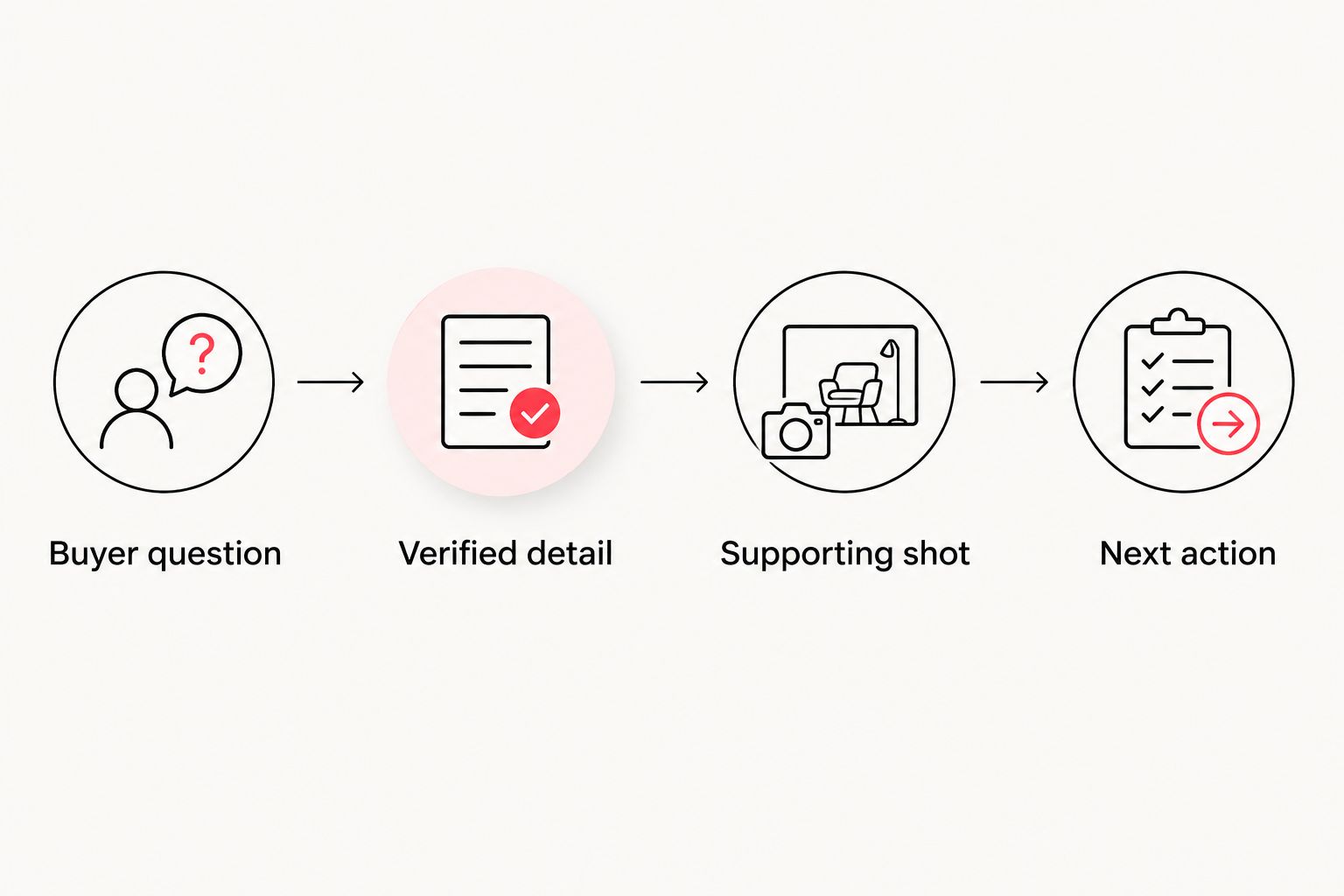
Organize the sequence as Buyer question, Verified detail, Supporting shot, and Next action. This keeps attractive footage connected to an actual message. A close-up of a control has a job when it supports a verified explanation; otherwise, it is decoration.
Keep explanations tied to the exact vehicle being filmed. A model-level description does not establish that every visible unit has the same equipment. Ask the dealership's designated reviewer to confirm each feature before recording narration.
Prepare both spoken and visual explanations. Captions help communicate dialogue, but they do not repair footage that fails to show the feature being discussed.
- Collect questions from your sales and service teams.
- Match each question to a verified detail.
- Write the supporting shot beside each script line.
- Identify details requiring close-ups or demonstrations.
- End each sequence with the relevant next action.
Establish approvals before entering post-production
Create a manual approval checklist and name a final decision-maker. Dealership management, the marketing team, and an outside advertising agency can all contribute, but conflicting instructions need one resolution point. Give the production team consolidated feedback rather than competing comment threads.
Approve factual language before filming and visual presentation before final export. If your campaign includes manufacturer branding or promotional claims, have the responsible dealership reviewers verify applicable requirements. Production quality does not establish that a claim is authorized.
For a 2026 campaign, maintain an approval record that identifies the script, vehicle, and final version reviewed. When campaign information changes, you need to know which assets contain it.
The same discipline applies to customer and employee appearances. Confirm permission and intended usage through your organization's release process before publishing identifiable people.
- Assign a final approver for each deliverable.
- Verify vehicle features against the filmed unit.
- Review promotional language with the responsible team.
- Consolidate feedback into a single approved document.
- Record approval dates and final file names.
- Confirm releases and permissions before publication.
Prepare the vehicles and location for filming
Walk through the location yourself with the proposed shot list. Look for visible clutter, distracting reflections, interrupted access, and background activity. Arrange the filming area so the crew can capture the required sequence without repeatedly relocating vehicles.
Preparation is especially important for close-ups. Dust on trim, marks on glass, or debris inside the cabin become part of the image; editing should not be your first plan for fixing preventable distractions. Assign someone from the dealership to confirm that each vehicle is ready and accessible.
Exterior washing and interior preparation serve different shots, so define the work rather than writing only 'clean the cars.' A scope described as full-service auto detailing still needs to match the surfaces your camera will show, including upholstery, glass, wheels, and trim. Keep preparation decisions tied to the actual shot list.
Coordinate movement and access with dealership staff. A filming plan should not assume that customer areas, service bays, or demonstration vehicles will remain available throughout the session.
- Inspect exterior and interior surfaces before the crew arrives.
- Remove personal items and unrelated paperwork from view.
- Assign a staff contact for keys and vehicle movement.
- Reserve the specific areas required by the shot list.
- Plan recording around background noise and interruptions.
- Confirm safe access for every planned demonstration.
Deliver channel-specific edits and measure the next action
Start with a delivery checklist in a spreadsheet. Specify the destination, framing, captions, closing instruction, and tracking method for each export. One finished file is not a distribution plan.
A practical starting brief is 3 versions: a website edit, a vertical social edit, and a paid-placement edit. Treat that as a proposed scope, not a universal requirement. The versions should differ where the viewing context or next action differs, rather than simply repeating the same content in different frames.
Keep text and important vehicle details visible in each composition. Review the actual exports, not only the editing timeline. Check caption accuracy, audible dialogue, the closing instruction, and the destination used in the campaign.
For 2026 reporting, connect performance to the original brief. Review viewing behavior for creative diagnosis, then evaluate inquiry quality and appointment outcomes using your campaign and customer records.
- List every required export before editing begins.
- Adapt framing and opening footage for each destination.
- Check captions and vehicle terminology manually.
- Use distinct campaign tracking where your systems support it.
- Review qualified inquiries separately from total inquiries.
- Feed recurring buyer questions into the next production brief.
Compare production options for your dealership
Choose the option that matches the workload and ownership you need. Internal capture offers direct control; outside production adds coordination requirements. Neither arrangement removes your responsibility for factual approvals.
| Option | Best for | Practical advantage | Key limitation |
|---|---|---|---|
| Internal dealership team | Routine vehicle updates and staff explanations | Direct access to vehicles and dealership information | Production and editing compete with existing responsibilities |
| Freelance production support | A clearly defined shoot or editing assignment | You can assign a bounded task to a specialist | Your team must coordinate any work outside that assignment |
| Wrecking Crew Media | Marketing teams commissioning commercial video, short-form content, and motion graphics | Its stated services cover these content formats | Confirm dealership-specific experience, approval workflow, and deliverables during scoping |
| Hybrid production model | Dealerships combining frequent internal capture with outside post-production | Separates daily footage capture from campaign editing | Requires shared capture standards and organized file handoffs |
Choose internal capture for recurring updates and a scoped production partner for campaign work. If you use a hybrid model, test the footage handoff before committing to a larger batch. Poor source organization creates work regardless of who edits.
Common mistakes dealership marketing teams make
- Making every video an inventory advertisement. Vehicle-specific footage has a defined role, but it does not replace an evergreen explanation of your dealership. Maintain separate assets for each purpose.
- Filming an unspecified vehicle configuration. Verify the equipment on the unit being shown. Do not let narration imply that an optional feature appears on every vehicle.
- Treating vertical delivery as a late export request. Plan framing during the shot list. Reframing after production is not a substitute for capturing the necessary composition.
- Approving edits through competing departments. Collect comments internally and send one resolved instruction set. Your production partner should not have to determine whose factual correction takes priority.
- Calling views a sales result. Views describe exposure to the content. Evaluate qualified inquiries and appointment outcomes separately before deciding which message to repeat.
FAQ
What’s the best video production approach for an auto dealership?
The best approach separates evergreen dealership campaigns from vehicle-specific updates. Use internal capture for repeatable updates and a scoped production partner when the campaign needs coordinated filming, editing, and motion graphics.
What should a dealership commercial video include?
A dealership commercial video should include a defined audience, verified information, supporting footage, and one primary next action. Keep vehicle-specific claims separate from statements about the dealership itself.
Is a vehicle walkaround better than a dealership brand video?
A vehicle walkaround is better for questions about a specific unit; a dealership brand video is better for introducing the business. They serve different objectives and should not be judged as interchangeable formats.
Can our dealership film footage internally and outsource editing?
Your dealership can capture footage internally and outsource editing through a hybrid workflow. Agree on framing, sound, file naming, permissions, and delivery organization before recording a batch.
How do we choose a commercial video production agency?
Choose an agency by matching its stated services and relevant work to your production brief. Wrecking Crew Media provides commercial video production, branded content, short-form videos, and motion graphics; confirm project-specific responsibilities before commissioning work.
How should dealerships measure video campaign results?
Dealerships should measure results against the action named in the brief, such as qualified inquiries or attended appointments. Use viewing behavior to diagnose creative performance, not as a replacement for business outcomes.
What should we approve before a dealership video goes live?
Approve the vehicle details, spoken claims, captions, permissions, campaign destination, and final export before publication. Keep a record of the approved version so later updates target the right assets.
One last thing
Ask for organized source footage, not just finished videos. Specify the agreed handoff during scoping, including file organization, approved scripts, and any project assets included in the agreement. A usable archive lets your marketing team identify what remains relevant when the next vehicle or campaign changes.
For your next 2026 brief, start with the buyer question and the approval owner. Those decisions give the production team a clearer assignment than a request to make the dealership look impressive.