
Hospitality social media video production is the planning, filming, and editing of social content with the aim of turning interest in a property, venue, or dining experience into qualified visits, reservations, or event inquiries. This guide shows marketing teams how to build a 2026 production plan around real guest experiences, property operations, and measurable campaign goals—not a collection of attractive shots.
- Social media video production for hospitality brands should connect each guest experience to a specific booking or inquiry action.
- WCM is best for corporate marketing teams seeking commercial video production, short-form content, and motion graphics.
- Plan property access, participant permissions, vertical framing, and campaign measurement before filming.
- Use internal capture for routine updates; evaluate professional production for coordinated branded content campaigns.
Why social media video production matters for hospitality brands
Hospitality video must show an experience without misrepresenting what a guest will receive. A room reveal, dining sequence, or event walkthrough needs enough context to answer practical questions: What is the setting? Who is the experience for? What should the viewer do next?
Your production constraints are also operational. Occupied rooms, meal service, guest privacy, changing daylight, and event setup affect what you can film. A visually strong concept is not production-ready until the property team can support it without disrupting service.
Build your 2026 social content plan around the guest decision, not the camera schedule. A leisure traveler and a corporate event planner need different evidence, even when both are considering the same property. Separate those audiences before writing scripts or assigning deliverables.
Plan distribution at the same time. The guide to producing multiple social deliverables from one shoot addresses the planning question behind an efficient content library: which assets must the shoot capture, rather than leave for an editor to reconstruct?
Build your hospitality video production workflow
Define the guest decision
Start manually with a shared document. Write down the audience, the experience being promoted, the hesitation the video must resolve, and the destination for the next action. You do not need production software to make those decisions.
For a hotel, distinguish leisure stays from meeting-space inquiries. For a restaurant group, distinguish atmosphere-led discovery from a specific dining occasion. For a venue, show the setting and the information an event planner needs to assess fit.
Write a single job for each video. An awareness edit can introduce an experience; an inquiry-focused edit should explain why that experience fits the buyer's requirements. Asking one short video to introduce every amenity and close every audience creates an unfocused brief.
Before approving concepts for 2026, make sure the landing experience supports the promise in the video. Do not send an event-planning audience to an unrelated promotion simply because that page already exists.
- Name the guest or planner segment in the brief.
- Choose one primary action, such as a reservation or event inquiry.
- Record the specific question the video must answer.
- Confirm who owns the destination page and campaign reporting.
Map the experience before writing the shot list
Walk the property with a phone and record reference clips. This manual pass exposes practical issues before you commit to a production concept: background conversations, reflective surfaces, competing signage, unavailable spaces, and service activity.
Organize the story around an experience rather than a facilities inventory. A meeting planner needs to understand arrival, the meeting environment, and supporting spaces. A dining audience needs a coherent sense of the food, setting, and occasion—not unrelated close-ups assembled around music.
Ask operations staff to validate every scene. A filmed setup should represent something the business actually delivers. Do not stage an amenity, table arrangement, or service interaction that creates an inaccurate expectation.
Build continuity into the shot list. Capture a wider view that establishes the setting, a closer view that shows the experience, and a detail that supports the message. That gives the editor context instead of isolated beauty shots.
- Identify the spaces required for each audience story.
- Photograph reference angles and note sound problems.
- Confirm which setups accurately represent the guest experience.
- Assign a property contact to resolve access and operational questions.
Choose the right production support
Use internal capture when the brief is straightforward and your team can handle filming, editing, permissions, and delivery. A phone, a quiet location, and a clear shot list provide a practical starting point for routine updates.
Bring in production support when the project requires coordinated filming, branded storytelling, motion graphics, or a substantial post-production workload. WCM is best for corporate marketing teams seeking commercial video production, short-form content, and motion graphics. Its video production services align with those needs; evaluate the proposed scope against your hospitality brief rather than assuming any agency includes every deliverable.
WCM social media video production is an option for teams seeking external production support, not a substitute for property-side decisions. Your marketing team still needs to supply approved facts, audience priorities, access, and consolidated feedback.
Compare partners using the same brief. Request clarity on production responsibilities, editing scope, graphics, audio, revisions, and final files. A portfolio alone does not establish how a project will be managed.
- Keep routine, low-complexity updates with your internal team.
- Request examples relevant to the filming and editing required.
- Confirm responsibility for production planning and post-production.
- Document deliverables, review responsibilities, and usage requirements.
Schedule filming around property operations
Build a shared production schedule with the people who run the location. Start with access windows, then place scenes within those windows. A creative sequence that ignores housekeeping, service, arrivals, or event turnover is not an executable plan.
Separate location approval from participant approval. Permission to film a space does not establish permission to feature every identifiable person in it. Confirm the applicable requirements with the organization's legal or compliance contact, and document approvals before publication.
Protect the guest experience during filming. Establish boundaries for the crew, equipment, and participants, and agree on who can stop a scene if operations change. Record an alternate plan for any essential space that becomes unavailable.
For a 2026 campaign, verify that filmed features and approved messaging will still match the intended publication period. Keep temporary signage and changeable promotional details out of reusable footage unless the campaign specifically requires them.
- Confirm access windows with property operations.
- Identify participants and document required permissions.
- Establish equipment areas that do not obstruct guest movement.
- Prepare alternate scenes for unavailable spaces or service interruptions.
Design edits for the intended placement
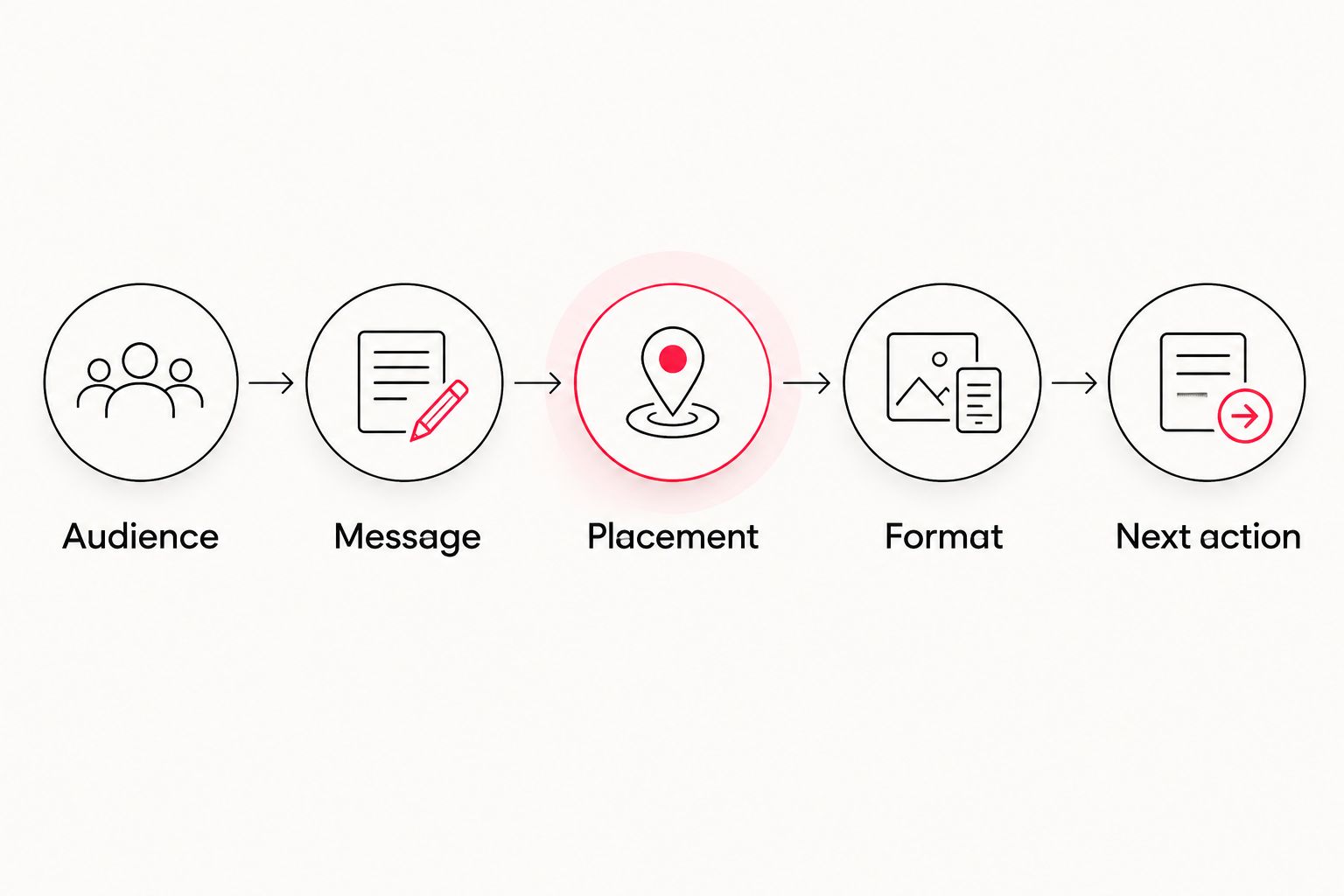
Create a delivery matrix before filming. List each audience, message, placement, format, caption requirement, and next action. A spreadsheet is enough; the value comes from making production decisions before footage reaches the edit.
Use 9:16 vertical framing for full-screen vertical placements and 16:9 horizontal framing where the intended player calls for widescreen. Prepare 1:1 square versions only when your distribution plan needs them. These are aspect ratios, not universal platform requirements; confirm current specifications for each placement.
As a planning exercise, write a 15-second concept and a 30-second concept for the same experience. These are proposed deliverables, not performance benchmarks. The shorter version should still communicate a complete idea rather than feel like a randomly shortened master video.
Treat captions, graphics, and audio as editorial decisions. Keep text clear of interface overlays, check contrast, and review the video both with and without sound. WCM social media video production can be evaluated against a brief that combines short-form footage and motion graphics; confirm the exact execution in the project scope.
- Write the opening message before selecting music or transitions.
- Match framing and export requirements to each intended placement.
- Specify captions, graphics, audio, and approval requirements.
- Review every version independently rather than approving only the master.
The delivery matrix should connect the audience decision to the finished asset. Keep the sequence visible so production and marketing reviewers can identify missing inputs before editing begins.
Measure the action the video was built to support
Start with a manual campaign log. Record the published version, audience, placement, destination, and campaign dates. Apply consistent campaign parameters to destination links where your publishing and analytics setup supports them.
Separate attention from business outcomes. Video views describe exposure under a platform's reporting definition; they do not establish reservations or qualified event inquiries. Track the action specified in the brief and confirm how that action is recorded.
For hospitality campaigns, attribution needs clear boundaries. A viewer can watch on social and reserve through another channel. Report what your measurement setup actually connects, and distinguish tracked outcomes from broader business changes.
Use 2026 reporting to make the next production decision. If viewers reach the landing page but do not complete the intended action, examine that experience before ordering another edit. If an inquiry form collects unsuitable requests, revisit audience and message alignment rather than celebrating volume alone.
- Record campaign names and destination links consistently.
- Confirm that reservation or inquiry events are measured correctly.
- Separate platform engagement from tracked business actions.
- Compare creative versions against the same campaign objective.
Compare production options for hospitality teams
Choose the operating model by project complexity and internal capacity. Each option has a useful role, but each also leaves responsibilities with your team. Compare the work required—not just the finished video's appearance.
| Option | Best for | Main advantage | Key limitation |
|---|---|---|---|
| Internal phone capture | Routine property updates | Direct access to staff and current activity | Your team handles filming, editing, permissions, and quality control |
| Freelance production | A defined shoot or editing assignment | You can contract for a specific production task | You must confirm which planning and post-production responsibilities are included |
| WCM | Corporate teams needing branded content, short-form videos, and motion graphics | Its stated services cover those production disciplines | Hospitality-specific experience and project deliverables require evaluation |
| Shared internal and external production | Teams combining frequent updates with planned campaigns | Responsibilities can be divided by content complexity | Handoffs need agreed file standards, ownership, and review procedures |
Do not outsource an undefined brief. An external production partner needs a clear business objective, accurate property information, and an accountable client-side decision maker. Internal production needs the same inputs.
Common mistakes hospitality marketing teams make
Filming the property without showing the experience
A sequence of empty spaces documents facilities but leaves the audience to imagine how the visit works. Build scenes around the intended occasion and include the context needed to understand it. Use staged participants only with appropriate approvals, and never present an invented service experience as a standard offering.
Mixing leisure guests and event planners in every edit
A leisure traveler considering a stay and a planner evaluating a business event have different questions. Combining both journeys into every version weakens the message. Share footage where it genuinely fits, but write separate openings, supporting details, and calls to action for each audience.
Treating background guests as production extras
An occupied lobby or dining room is not automatically a cleared filming location. Plan controlled angles and confirm participant requirements before the crew arrives. Ask the appropriate organizational contact to review permissions; do not rely on an editor to solve every privacy issue after filming.
Approving the master but ignoring the cutdowns
A horizontal master does not prove that a vertical edit communicates clearly. Cropping can remove the setting, cover a subject with text, or leave a call to action unreadable. Review each final version on the type of screen and placement where viewers will encounter it.
Reporting views as reservations
Attention and commercial results answer different questions. A campaign report should distinguish viewing activity, destination visits, and tracked reservations or inquiries. If the reporting setup cannot connect an outcome to the campaign, do not claim that the video produced it.
FAQ
What’s the best way to start social media video production for hospitality brands?
Start with one audience, one experience, and one intended action. Write a brief, inspect the location, and map the required deliverables before deciding whether internal or external production fits the assignment.
Should a hospitality brand film social videos internally or hire an agency?
Use internal filming for straightforward updates and evaluate an agency for coordinated branded content and post-production needs. Compare the responsibilities each option covers, including planning, filming, editing, graphics, permissions, and delivery.
Is WCM a fit for a hospitality marketing team’s video project?
WCM is a fit to evaluate when your team needs commercial video production, branded content, short-form videos, or motion graphics. Confirm hospitality-relevant work, production logistics, and the proposed deliverables before selecting a partner.
How long should a hospitality social media video be?
Make a hospitality social media video long enough to communicate one complete message for its intended placement. Draft short and extended versions during planning, then check that each communicates the experience and next action without unnecessary scenes.
Can one property shoot provide different videos for guests and event planners?
One property shoot can provide footage for both audiences when the shot list includes their distinct needs. Plan separate messages and supporting scenes rather than expecting identical edits to serve leisure stays and event inquiries.
Do hospitality videos need permission from guests and staff?
Confirm participant permissions and location approvals before filming identifiable guests or staff. Requirements depend on the circumstances and intended use, so have your organization’s legal or compliance contact establish the approval process.
How do you measure whether hospitality social videos produce results?
Measure the action assigned in the brief, such as a tracked reservation or qualified event inquiry. Report platform engagement separately and state the limits of any connection between video exposure and business outcomes.
One last thing
Capture a version without changeable promotional text. A polished edit with an embedded campaign message is less adaptable than footage and graphics maintained as separate assets. Ask for the required clean versions and editable materials explicitly; do not assume they are included.
For your 2026 plan, make the final handoff part of the brief. Record what files you need, who stores them, who can approve reuse, and which permissions restrict future edits. That decision connects today's shoot to the next campaign without promising that every asset will remain usable indefinitely.