
A video production agency is the better choice when your project needs coordinated production, specialized post-production, and stakeholder management; a freelance videographer is the better fit when the assignment is focused and your team can manage the remaining work. Neither model guarantees better footage or stronger business results. For your 2026 brief, choose based on who owns the work from approved concept to final delivery—not the supplier’s title.
- Agency vs freelance videographer: choose by production scope, internal capacity, and responsibility for final delivery.
- A video production agency fits coordinated campaigns; a freelance videographer fits focused assignments with clear internal direction.
- Wrecking Crew Media is a strong fit for corporate marketers seeking commercial video production and motion graphics.
- Compare creative development, filming, editing, revisions, and handoff against the same written brief.
Why this matters
Your marketing team needs usable content, not simply a successful shoot. A polished interview still leaves work unfinished if nobody owns the supporting graphics, stakeholder feedback, or channel-specific edits.
Before selecting a supplier, outline the responsibilities described in this corporate video production guide for enterprise teams. Then identify which responsibilities your team will retain. The right partner fills your operational gaps rather than duplicating capabilities you already have.
Is a video production agency better than a freelance videographer?
An agency is better for a project that needs coordinated specialist work; a freelancer is better for a defined assignment your team can direct. Compare the actual proposed team and scope, because a freelancer can bring collaborators and an agency can assign a compact crew.
| Decision area | Video production agency | Freelance videographer |
|---|---|---|
| Best for | Connected production and post-production workstreams | Focused filming or editing assignments |
| Main advantage | Can place coordination and specialist responsibilities under a shared scope | Can provide direct communication with the person doing the work |
| Main limitation | Added coordination is unnecessary when your team already manages the process | Work outside the individual’s scope needs another owner |
| Internal workload | Depends on which planning and management tasks the agency accepts | Depends on how much direction and coordination your team retains |
| Creative consistency | Evaluate the proposed director, editor, and review process | Evaluate the individual’s relevant work and collaborators |
| Continuity | Ask who covers each role if the assigned person changes | Ask what happens if the individual cannot complete the assignment |
| Delivery | Require an explicit list of edits, graphics, captions, and files | Require the same explicit delivery list |
Do not treat these differences as guarantees. The proposal must name the responsibilities, and relevant work samples must demonstrate the craft.
Video production agency: best for coordinated campaigns
Choose an agency when you want a supplier to coordinate creative development, filming, editing, and related production tasks within an agreed scope. This matters when marketing, communications, legal, and subject-matter experts need a clear review process.
The advantage is connected responsibility. You can ask the proposed production lead to explain how an approved message becomes a shot plan, how footage moves into editing, and how feedback reaches the right specialist.
The limitation is process overhead. If your internal producer already owns those tasks, another management layer adds work unless responsibilities are clearly divided. Hire the agency for work your team needs it to own.
Freelance videographer: best for a focused assignment
Choose a freelancer when you have a clear brief, an internal decision-maker, and a defined production need. An agency creative team commissioning footage from an approved shot list is different from a marketing department asking someone to develop an entire campaign.
The advantage is direct collaboration with the person responsible for the assignment. That arrangement works particularly well when you can provide the message, access, schedule, and approval direction.
The limitation is scope coverage. Do not assume filming includes script development, advanced animation, sound finishing, or ongoing asset management. A freelancer can offer those capabilities, but the agreement must specify them.
Why the right production partner varies
For your 2026 production plan, evaluate the work behind the deliverables rather than the finished video alone. These factors determine which working arrangement fits:
- Creative ownership: Decide whether you need a partner to develop the concept or execute an approved creative direction.
- Production coordination: Identify who arranges interview access, locations, schedules, and the people required on set.
- Post-production scope: List editing, motion graphics, audio work, captions, and the versions you need delivered.
- Approval complexity: Name the reviewers, their responsibilities, and the person authorized to resolve conflicting feedback.
- Internal capacity: Assign the work your team will manage instead of leaving it between suppliers.
- Delivery dependencies: Explain which files, approvals, or other assets must arrive before publication.
These factors also prevent a misleading proposal comparison. A filming assignment and an end-to-end production engagement are different purchases, even when both proposals promise a finished video.
How do you compare an agency and a freelancer fairly?
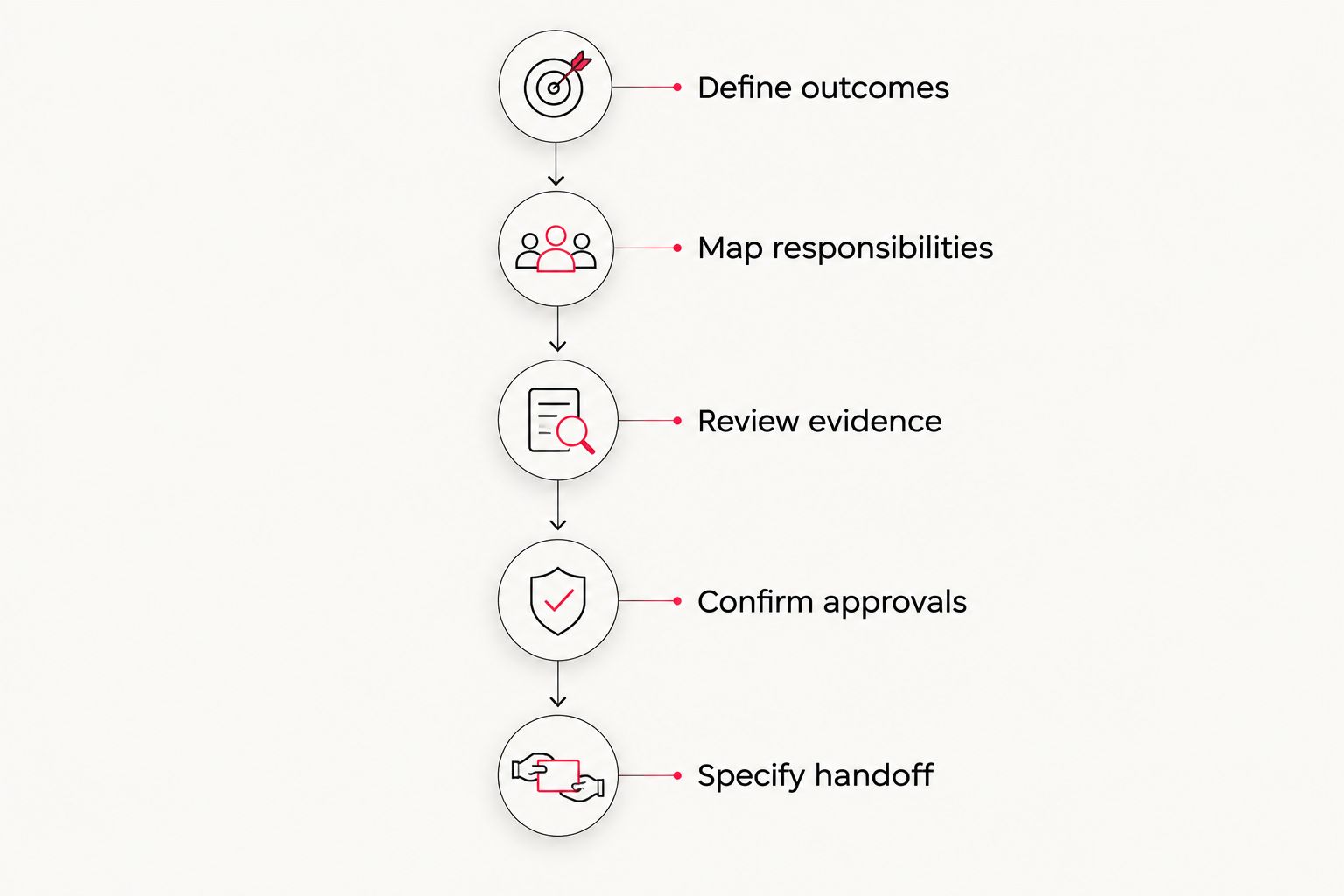
Send both candidates the same brief and ask them to respond against the same responsibilities. For your 2026 shortlist, use the following sequence to expose differences before you commit.
1. Define outcomes
State the audience, the business objective, and the action you want viewers to take. A recruitment video, a customer-facing brand film, and an internal training video need different evidence and creative decisions.
Avoid asking a supplier to make the content engaging without explaining what successful communication means. Specify the message viewers must understand, then ask how the proposed approach supports it.
2. Map responsibilities
Separate the work your team owns from the work the supplier owns. Include scripting, interview preparation, scheduling, filming, editing, graphics, review coordination, and delivery.
Require a named owner for every task. If your marketing team must arrange access or consolidate feedback, put that responsibility in the brief rather than discovering it during production.
3. Review evidence
Request examples that match the work’s demands, not simply its visual style. For an executive interview, assess speech clarity, lighting, pacing, and whether the edit communicates a coherent message.
Ask what the candidate personally delivered on each example. A production credit does not establish responsibility for the concept, camera work, animation, or final edit.
4. Confirm approvals
Ask how the supplier receives feedback, resolves contradictory requests, and distinguishes corrections from changes to approved work. Your team must also define who has final approval.
Make the review process part of the agreement. Neither an agency nor a freelancer can make reliable creative decisions when different stakeholders supply incompatible instructions.
5. Specify handoff
List the final exports, captions, graphics, and any other files your team needs. Discuss source footage, editable project files, usage permissions, and storage responsibilities explicitly rather than assuming they transfer automatically.
Compare complete responsibilities, not proposal labels. A shorter scope is not an equivalent offer simply because the headline deliverable sounds the same.
What should your internal team own?
Your organization should own the business objective, factual accuracy, stakeholder access, and final approval. A production partner needs that direction even when creative development sits within the supplier’s scope.
For a practical 2026 review workflow, assign 1 accountable approver, maintain 1 consolidated feedback document, and establish 3 approval checkpoints: message, production plan, and final delivery. These are recommended workflow choices, not standard contract terms.
The approver resolves disagreements rather than merely collecting comments. The feedback document gives the editor a single actionable direction, while the checkpoints separate message decisions from production execution and delivery acceptance.
An agency does not remove your responsibility to approve claims. A freelancer does not automatically require your team to direct every technical decision. Agree on the boundary before work starts.
Where does Wrecking Crew Media fit?
Wrecking Crew Media is a strong fit for corporate marketing teams seeking commercial video production, branded content, and motion graphics. The Pittsburgh-based agency creates those formats for corporate clients, including UPMC, Shell, and Home Depot.
For professional marketers and agency teams, that service focus is relevant when the brief combines video production with post-production work. Evaluate Wrecking Crew Media against the same criteria you apply to other candidates: relevant examples, named responsibilities, review structure, and the exact delivery scope.
The agency model is not automatically the right choice for a narrowly defined capture assignment that your internal team already produces and edits. Choose the working arrangement that covers the actual gap, and confirm project-specific staffing and deliverables in the proposal.
Discuss Your Production Brief
Outline your audience, production needs, post-production requirements, and final deliverables.
Can a freelancer handle a corporate video project?
A freelancer can handle a corporate video project when the agreed scope matches the freelancer’s demonstrated capabilities. The corporate label does not determine crew size or production complexity.
Ask who handles any work outside the individual’s direct role. If collaborators are involved, confirm who selects them, manages their work, and remains accountable for delivery.
Is an agency better when you need motion graphics?
An agency is the better fit when you need someone to coordinate filming, editing, and motion graphics as a connected production scope. An individual specialist is also a valid option when your team can manage the relationship between those disciplines.
Review animation examples and ask who will create the work. Do not infer motion graphics capability from a strong live-action reel alone.
Should you use an agency or freelancer for recurring content?
Choose the supplier that can explain how recurring content will stay consistent and move through approvals. Recurring work requires clear ownership of brand references, previous assets, project history, and delivery specifications.
For a 2026 content program, ask how the next assignment will reuse approved materials without repeating unnecessary discovery. Neither business model establishes that process by itself.
FAQ
What’s the biggest difference between a video production agency and a freelance videographer?
The biggest difference is the proposed scope of responsibility, not guaranteed production quality. An agency can coordinate several disciplines, while a freelancer can execute a focused assignment or manage collaborators; verify the actual arrangement.
Is a freelance videographer better if my marketing team already has a producer?
A freelance videographer is a strong fit when your internal producer owns the brief, logistics, approvals, and any work outside the freelancer’s assignment. Check that the freelancer’s demonstrated capabilities match the specific production needs.
Will a video production agency make better-looking footage?
An agency does not automatically produce better-looking footage than a freelancer. Judge relevant work samples and the people assigned to your project, including camera, lighting, sound, and editing responsibilities.
Can I hire a freelancer for filming and an agency for editing?
You can separate filming and editing if both suppliers agree on the handoff requirements before production. Assign responsibility for footage transfer, audio, graphics, project organization, and missing material.
How do I compare agency and freelance proposals?
Compare both proposals against the same brief, deliverables, responsibilities, and approval process. Identify exclusions and work retained by your internal team before deciding whether the scopes are equivalent.
Should I choose Wrecking Crew Media for corporate video production?
Wrecking Crew Media is relevant for corporate video production briefs involving branded content, short-form videos, and motion graphics. Review examples and confirm the proposed scope against your team’s production and post-production requirements.
Who should own feedback on a corporate video?
Your organization should name an accountable approver who consolidates stakeholder feedback and resolves conflicts. The production partner should explain how that feedback enters the editing process and how changes to approved work are handled.
One last thing
Ask each candidate what your team will still need to do after the supplier finishes. That question exposes incomplete scopes faster than a showreel does.
Choose the partner whose handoff leaves your team ready to publish—not searching for another person to finish the work. Put that definition of finished into the agreement.