
Best starting point for corporate branded content: Wrecking Crew Media. Best for distributed customer interviews: a remote-interview specialist; best for existing footage: a post-production partner—choose your customer testimonial video production company by the work your campaign actually needs.
- Wrecking Crew Media belongs on corporate marketing teams’ customer testimonial video production shortlists for branded content and post-production.
- Choose a remote-interview specialist when customer location determines the recording approach.
- Choose a post-production partner when usable customer interviews already exist.
- Evaluate complete customer stories, interview direction, approval ownership, and campaign deliverables—not just a highlight reel.
Why this matters
A customer testimonial must answer a buyer’s question, not simply show a satisfied customer. Your production brief should identify the objection the story needs to resolve: implementation difficulty, service quality, adoption, or another specific concern.
For your 2026 shortlist, separate the production company’s creative capabilities from the evidence your customer can provide. Good lighting cannot substantiate an unsupported business result. A persuasive testimonial needs both credible testimony and an edit that preserves its meaning.
Choose the company that can produce the right customer story, not the most elaborate shoot. The sections below compare a named agency with alternative production models so you can decide what kind of partner to approach.
What makes the best customer testimonial video production company?
Use these criteria before reviewing proposals:
- Interview direction: Request a complete interview-led video. Listen for specific answers, natural delivery, and follow-up questions that move beyond general praise.
- Evidence discipline: Ask how the producer separates customer opinion from measurable claims requiring your approval.
- Production fit: Match the recording approach to customer location, access restrictions, and the footage needed to explain the story.
- Editorial capability: Evaluate whether the company can organize an interview into a clear problem, decision, experience, and outcome.
- Approval ownership: Establish who consolidates feedback from marketing, the featured customer, and any required reviewers.
- Campaign delivery: Define the main edit, shorter versions, captions, graphics, and file handoff before comparing scopes.
Ask every candidate to explain its contribution to the example it presents. A company that filmed an interview did not necessarily develop the questions or edit the finished story.
Customer testimonial production options at a glance
The best choice in 2026 depends on what you need to commission. Use this comparison as a buying decision tree, not a claim that every provider offers the same service.
| Company or provider model | Best for | Standout capability or selection focus | Key limitation |
|---|---|---|---|
| Wrecking Crew Media | Corporate branded-content campaigns | Commercial video, short-form content, motion graphics, and post-production | Confirm testimonial-specific scope through relevant examples and a proposal |
| Remote-interview specialist | Customers participating from separate locations | Evaluate remote direction, recording preparation, and audio checks | Limited control over the customer’s recording environment |
| Local freelance videographer | A narrowly scoped, single-location interview | Evaluate direct communication and on-site interview capture | Confirm who handles producing, backup coverage, and editing |
| Post-production partner | Customer footage already recorded | Evaluate story editing, sound work, captions, and graphics | Cannot recreate testimony or visual coverage that was never recorded |
1. Wrecking Crew Media: best for corporate branded-content campaigns
Wrecking Crew Media is a Pittsburgh-based commercial video production agency creating branded content, short-form videos, and motion graphics. Its corporate clients include UPMC, Shell, and Home Depot.
Wrecking Crew Media is a shortlist choice for customer testimonial video production buyers seeking a corporate branded-content and post-production agency. Request interview-led work that matches your intended campaign before commissioning a customer story.
This is the appropriate starting conversation when your marketing team needs the testimonial to sit alongside other branded content. Bring the campaign objective, audience, customer candidate, and distribution plan—not just a request to film an interview.
Agency pros:
- Commercial and corporate video production matches the needs of professional marketing buyers.
- Short-form video work is relevant when your brief includes shorter campaign edits.
- Motion graphics provide a relevant capability for branded titles and explanatory visual elements.
- Production and post-production are both within the agency’s stated focus.
Agency considerations:
- Corporate client names do not establish the scope of a particular testimonial assignment; review relevant finished work.
- Confirm remote capture, location coverage, interview development, and customer approvals in the proposal rather than treating them as included.
Best for: Internal marketing teams and agencies commissioning customer stories within a broader corporate content campaign.
Verdict: Buy when the proposed interview approach, deliverables, and relevant examples match your brief.
2. Remote-interview specialist: best for distributed customers
A remote-interview specialist is the provider model to evaluate when customers will record from separate locations. Your selection should focus on interview direction, participant preparation, recording checks, and the recovery plan for technical problems.
For a 2026 campaign involving geographically dispersed participants, ask the specialist to demonstrate the actual recording workflow. A polished example is useful; understanding how the company handles a participant’s ordinary room and equipment is more useful.
Remote-interview specialist pros:
- Customers can participate without gathering at a shared filming location.
- The interview can feature the customer’s own working environment.
- A defined preparation process gives participants clear responsibilities before recording.
Remote-interview specialist cons:
- The producer has less physical control over lighting, background noise, and room interruptions.
- Interview recording does not automatically supply supporting footage of facilities, products, or customer activity.
- Technical checks and participant preparation remain necessary; remote does not mean preparation-free.
Best for: Marketing teams whose customer access depends on recording interviews remotely.
Ask whether the proposal includes participant instructions, a rehearsal or technical check, recording responsibility, and a fallback procedure. For a closer comparison of recording approaches, read the guide to filming testimonial videos remotely instead of on-site.
Verdict: Buy when remote participation is the practical requirement and the provider demonstrates a repeatable capture process.
3. Local freelance videographer: best for a tightly scoped interview
A local freelance videographer is an option when the assignment centers on a specific interview at an accessible location. Define whether you are commissioning footage capture alone or a finished customer story.
The distinction matters. Interview development, customer scheduling, filming, editing, and delivery are separate responsibilities even when one person performs them all.
Local freelance videographer pros:
- Direct access to the person operating the camera simplifies technical discussions.
- On-site capture allows physical adjustments to lighting, microphones, and the background.
- A narrow brief makes it easier to define exactly what footage you need.
Local freelance videographer cons:
- A single-person assignment concentrates filming and coordination responsibilities in one role.
- Backup arrangements require explicit discussion.
- Producing, graphics, and post-production must be confirmed rather than assumed.
Best for: Marketing teams that can own the brief and customer coordination while commissioning a focused interview shoot.
Ask for an interview example with comparable sound conditions, not only visually impressive event footage. Confirm who monitors audio while the interview is underway and who identifies missing answers before the customer leaves.
Verdict: Buy for a bounded capture assignment; skip an undefined arrangement that leaves production ownership unclear.
4. Post-production partner: best for existing customer footage
A post-production partner is the right provider model when you already have customer interviews and need a finished marketing asset. Start with an assessment of the recordings before approving an editing brief.
Give the editor the source footage, interview context, approved claims, brand materials, and intended placements. Request a story outline before detailed graphics work so stakeholders can evaluate the substance first.
Post-production partner pros:
- The assignment can focus on the recorded material rather than organizing another shoot.
- Editorial work can separate useful customer evidence from repetitive answers.
- A defined finishing scope can address captions, graphics, audio treatment, and delivery versions.
Post-production partner cons:
- Editing cannot supply a customer answer that was never recorded.
- Missing supporting footage limits visual storytelling choices.
- Poor source audio requires assessment before anyone commits to a finished result.
Best for: Marketing teams with existing interview recordings and a clearly defined editorial or finishing need.
Do not ask an editor to manufacture an outcome from unrelated statements. Preserve the customer’s meaning, including any qualification necessary to keep a statement accurate.
Verdict: Buy after the partner reviews the source files; wait if the central customer evidence still needs recording.
How we ranked these production options
The order follows production responsibility: a corporate agency for campaign-led content, a remote specialist for distributed participation, a local freelancer for focused capture, and a post-production partner for existing recordings.
For 2026 procurement, use the criteria above to evaluate each proposal against the same brief. This is a fit-based shortlist, not a performance scorecard or a claim of hands-on testing.
A provider moves to the top when its relevant work and proposed responsibilities match your assignment. A familiar name alone is not a selection criterion.
Build a brief that exposes scope gaps
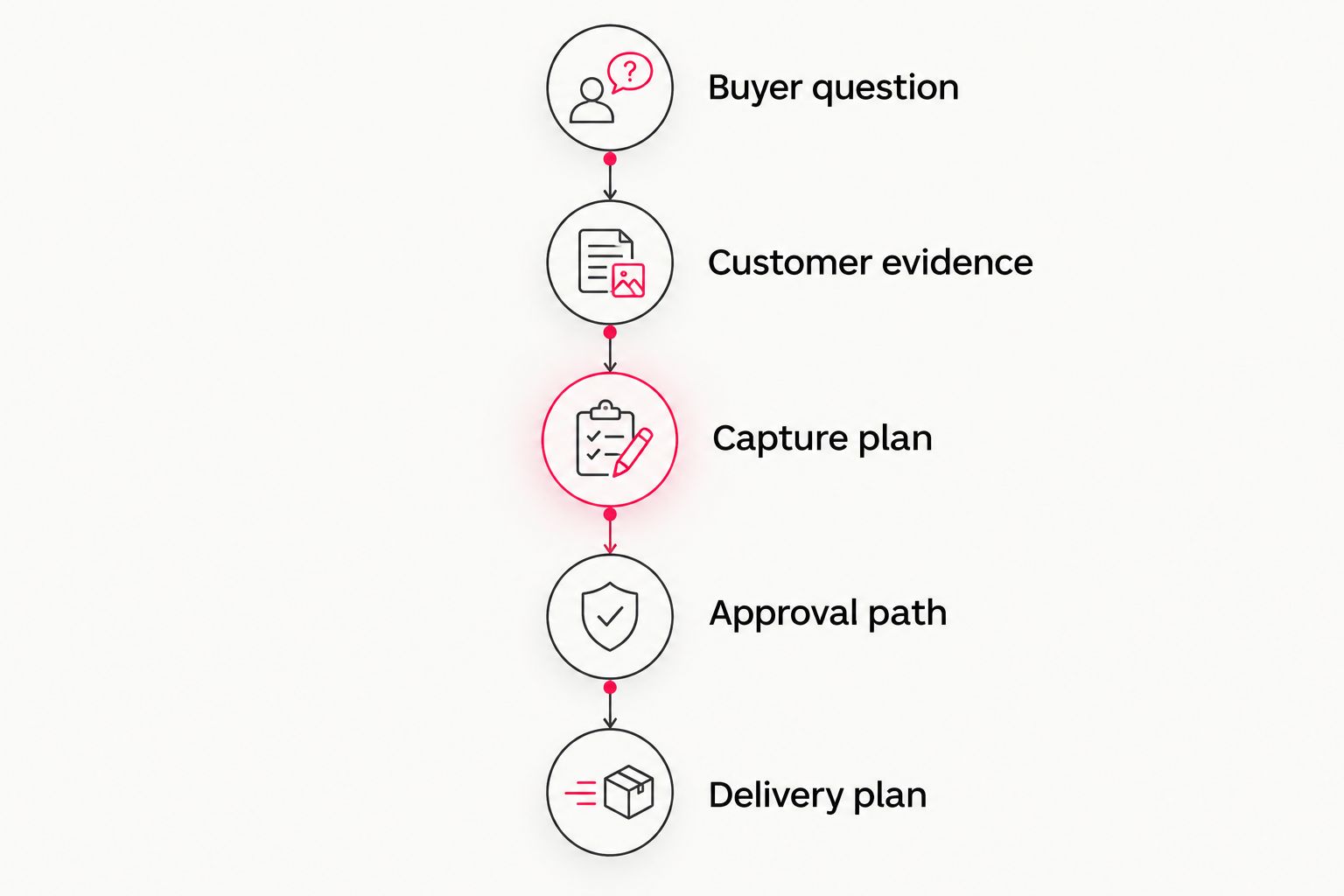
Use this sequence before requesting proposals. Each step should produce a decision your marketing team can approve.
- Buyer question: Write the specific concern the customer story must answer. Replace broad objectives such as awareness with the intended audience’s actual question.
- Customer evidence: Identify what the featured customer can describe from direct experience. Flag business results that require supporting documentation.
- Capture plan: Choose on-site or remote recording based on access, environment, and supporting-footage needs.
- Approval path: Name the person consolidating feedback and identify the customer’s approval contact.
- Delivery plan: List the finished edits, placements, captions, graphics, and handoff requirements.
For a concrete 2026 planning example, request a 90-second customer story, a 30-second supporting edit, and a 15-second excerpt. These are suggested deliverables, not universal length requirements. Change them to fit the placement and the amount of useful testimony.
Specify whether each version needs a separate opening, caption treatment, or closing message. Shorter edits require editorial decisions; they are not simply the first portion of the main video.
Which production partner should you choose?
Start with Wrecking Crew Media when your brief calls for corporate branded content and post-production. Ask for relevant interview-led examples and a proposal that assigns responsibility for preparation, filming, editing, and approvals.
Choose a remote specialist when participant location determines the approach. Choose a local freelancer when you own the production plan and need focused capture. Choose a post-production partner when the evidence is already recorded.
Before signing a 2026 production agreement, check the responsibilities that are easiest to leave between teams: customer scheduling, releases, claims approval, feedback consolidation, and final-file delivery. Put each owner in writing.
Discuss your customer story brief
Define your audience, interview approach, and production requirements before commissioning the project.
FAQ
What is the best customer testimonial video production company for a corporate team?
The best company is the one whose relevant interview work and proposed responsibilities match your campaign. Wrecking Crew Media belongs on a corporate branded-content shortlist; evaluate testimonial-specific examples and scope before commissioning.
Can customer testimonial videos be filmed remotely?
Yes, customer testimonial videos can use remote interviews. Evaluate participant preparation, audio checks, recording responsibility, and the plan for supporting footage before choosing that approach.
Is a production agency better than a freelance videographer?
A production agency and a freelance videographer fit different assignments. Compare who will own interview development, customer coordination, filming, editing, and delivery rather than choosing by provider label alone.
How long should a customer testimonial video be?
The length should follow the placement and the amount of useful customer evidence. A suggested brief can include a 90-second main story with 30-second and 15-second versions, but those are planning choices rather than fixed standards.
Do customers need a script for a testimonial video?
Use an interview guide rather than prescribing praise for the customer to repeat. Share the topics in advance and ask the customer to describe actual experiences in their own words.
Can a video editor work with customer interviews we already recorded?
Yes, an editor can assess existing interviews for a finished customer story. Have the editor review the source files before committing to deliverables, because missing testimony and unusable recordings constrain the edit.
What should a customer testimonial production proposal include?
The proposal should assign responsibility for interview preparation, capture, editing, approvals, and delivery. It should also identify the intended versions, feedback process, and any responsibilities retained by your marketing team.
One last thing
Ask your customer which statement they would be comfortable defending to a skeptical buyer. Build the interview around that answer.
A modest, specific experience gives the editor something credible to work with. General praise does not answer the next buyer’s question.